


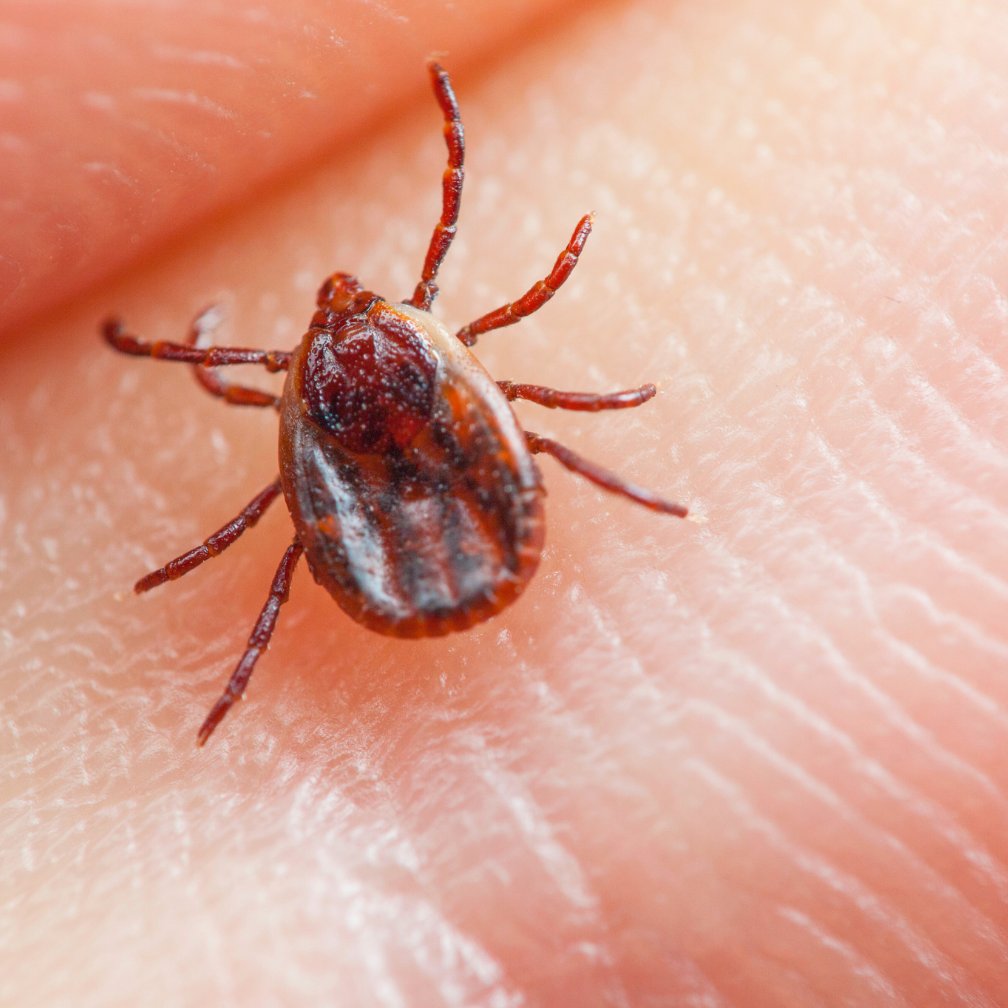
Martha’s Vineyard has a thriving population of ticks. Seriously, these parasitic arachnids are everywhere on this scenic island, which sits seven miles off the coast of Cape Cod. They prey on mammals like shrews, mice, and deer, but they also like the taste of humans. Most people who live on this Massachusetts island have either been bitten by a tick themselves, or they know someone who has.
The problem is that, much like mosquitoes, when these tiny, blood-sucking critters cut into the skin with their teeth to feed, they don’t just risk leaving a bruise; they can also spread diseases. For a long time, Martha’s Vineyard has had the highest rates of Lyme disease, a bacterial infection characterized by a target-shaped rash, in Massachusetts.
But for the last few years, residents have had more to worry about than Lyme. Cases of alpha-gal syndrome, a potentially life-threatening allergy to meat and other mammalian products that can develop after bites from lone star ticks, have risen sharply on the island. Since 2020, more than 1,500 alpha-gal tests at Martha’s Vineyard Hospital have come back positive.
The rise in diagnoses has reshaped the island’s dining scene. Restaurants have had to adapt to an increasing number of people who aren’t just eating plant-forward by choice but because they have to for their health. While some people with alpha-gal experience only mild reactions to red meat or dairy, others can develop hives, diarrhea, or even anaphylaxis.
 Canva
Canva
The rise of alpha-gal-friendly vegan options
“We went from receiving about one call per month to one call per day regarding alpha-gal syndrome in just a six-month period,” Debbie Cohen, the owner and chef of Pawnee House, a popular contemporary restaurant on Martha’s Vineyard, tells VegNews.
Now, when you scan the restaurant’s menu, you’ll see “alpha-gal friendly” listed next to various items. Similar labels have become increasingly common across the island, as familiar as “gluten-free” or “vegan.” But for many restaurants, making diners with alpha-gal feel welcome goes beyond menu labels.
“The industry response on Martha’s Vineyard has been collaborative,” says Cohen. “Local chefs and owners frequently talk and bounce ideas off each other. We have shared our own practices with others, such as using dedicated tongs and specific pans that have never touched animal products since the day we opened.”
She adds that, since opening in 2020, Pawnee House has served plant-based options for sustainability reasons, but it has expanded its offerings to meet growing demand from people with alpha-gal. While many can consume some animal products, such as seafood, plenty discover that plant-based foods offer satisfying alternatives they hadn’t previously considered.
 You Enjoy My Vegan
The future of inclusive dining on Martha’s Vineyard
Mufyn, who runs the Martha’s Vineyard vegan food truck You Enjoy My Vegan, says she has found a new role in the community in recent years—helping people with alpha-gal syndrome embrace a new way of eating.
“During the last two off-seasons, I’ve hosted vegan community suppers, and we’ve seen a significant increase in attendance from people looking for safe food options,” she tells VegNews. “This past winter, I also taught vegan community cooking classes to help people learn how to transition their cooking and eating habits after an alpha-gal diagnosis.”
The relief is often immediate, she says, when people arrive at the truck and realize that everything on the menu is suitable for them.
 Canva Studios
“Many people approach our food truck assuming they’ll need to modify menu items or order things without cheese,” she says. “They’re often surprised when we explain that we’re 100% vegan and that our made-from-scratch cheeses, sauces, dressings, and menu items are all alpha-gal friendly. They’re especially excited when they realize they can enjoy things they thought were off limits. Yes! They can have our Philly cheesesteak!”
Both Cohen and Mufyn are witnessing a real-time shift away from meat on the island. It’s a complex win; on the one hand, the rising demand for plant-based foods has significant environmental, ethical, and health benefits. But it’s also bittersweet that the change is being driven by a tick-borne disease with very real and serious consequences.
Still, Mufyn says many of the people with alpha-gal she’s met—including her own son—aren’t resentful. “People who make the transition often tell us they are thriving and have no desire to go back to eating meat, even after their levels improve or their restrictions change,” she says. “They’re not just making a temporary adjustment; many are discovering a whole new way of eating that they genuinely enjoy.”
For more plant-based stories like this, read:
JUMP TO ... Latest News | Recipes | Guides | Health | Subscribe

Charlotte is a VegNews editor and writer based in sunny Southsea on England's southern coast.