


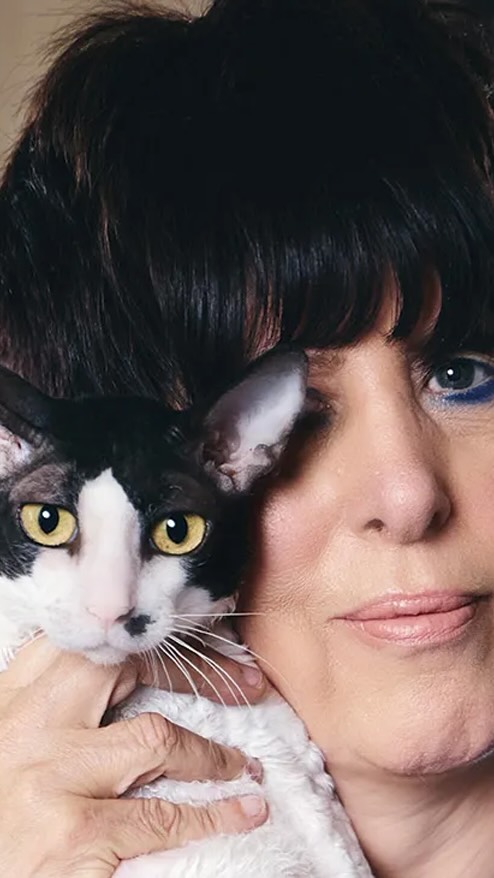
Diane Warren is known to millions for her chart-topping songs, including “If I Could Turn Back Time,” “Because You Loved Me,” and “Un-Break My Heart” that have been recorded by the biggest names in the music industry from Celine Dion and Cher to Elton John and Aerosmith. But what many don’t know about the 69-yearold prolific songwriter, who has a Grammy, an Emmy, and two Golden Globe awards under her belt (not to mention nine number one and 33 top-10 hits on the Billboard charts over the course of her multi-decade career), is that she is a staunch animal-welfare advocate. In addition to having donated millions of dollars to animal rights’ organizations over the years, Warren runs a seven-acre animal rescue ranch in Malibu that is home to more than 70 animals, including pigs, goats, chickens, donkeys, horses … “just a bunch of really cool animals,” she says from the headquarters of her Realsongs music company in Los Angeles.
Her recent documentary film, Diane Warren: Relentless, includes footage of her at the Mousebutt Rescue Ranch (named in honor of her late cat, Mouse, and a parrot named Buttwings), where she is clearly in her element. We talked with Warren, a Van Nuys, CA native and proud cat momma, about her animal advocacy and passion for her craft, which includes a unique new musical venture: the album Songs in the Key of Diane, a 13-track collaboration with reggae and Pacific Island artists reinterpreting songs from her vast catalog—including a new version of “Rhythm of the Night,” Warren’s hit song for DeBarge.
 Diane Warren | Instagram
JULIET PENNINGTON: When did your affinity for animals begin?
DIANE WARREN: When I was a little kid. I’ve always loved animals—I remember going to a farm with my mom and dad and seeing baby pigs and asking about them. When I was told that they were raised for bacon, I was like, “Are you kidding me?” From then on, I never ate bacon. I never ate a lot of meat when I was younger … I was vegetarian for more than 25 years, and now I’m mainly vegan. When you realize what meat is, that it didn’t end up on your plate voluntarily, that it was murdered … it was tortured and murdered, you’ve got to ask yourself what you’re doing. It’s so disgusting.
JP: So when did you transition from vegetarian to vegan?
DW: In the last probably seven, eight years. I am pretty much vegan. I mean, if I have pasta, maybe I don’t know if there’s egg in it or something, but I ask questions and try my best.
JP: Why is it important to you to live a plant-based lifestyle?
DW: Because I don’t want to be a part of murder. I don’t want to be a part of that horrible, disgusting, cruel industry. People have dogs and cats, and they don’t realize that there’s no difference. In fact, a pig’s smarter than your dog, you know? Everybody who is eating meat should look at what they’re eating and know what happened, how it got on your plate. It was a sentient being who wanted to live as much as you do. It’s horrifying that we do this. To me— and I’m Jewish—it’s a holocaust. But people don’t want to know.
JP: So how do you think they reconcile eating animals?
DW: They just disassociated … I mean they’ll get a breast of chicken. Come on, that was a chicken; that was a life. Or worse—and I mean, it’s all bad—but lamb or veal. You’re eating babies, really? But oh, you’re so much about saving the children in the world, really? You hypocrites.
JP: How do you handle it when people around you eat animals?
DW: I have a hard time. I mean, I try to not have people bring meat into my studio, but some do anyhow when I’m not looking. I remember someone calling people who eat animals “corpse crunchers.” I mean, it’s true. You’re using your body as a cemetery, a graveyard. It’s so disgusting if you think about it. I went to an event for rhino preservation that my friend was hosting, and it wasn’t vegan. They served animals. Like, are you kidding me?
JP: You have a youthful appearance and a lot of energy. Do you think your diet has something to do with it?
DW: Yeah, I think so. I think the music keeps me young, too. I’m always being creative, always writing with young artists. But, yeah, I try to eat really well, and I think that not eating dead bodies helps because all that stuff is really disgusting—and it’s really bad for you. What they’re giving these poor animals, all the hormones … it’s ugh. But thank you … I have good lighting right now.
 Vromage
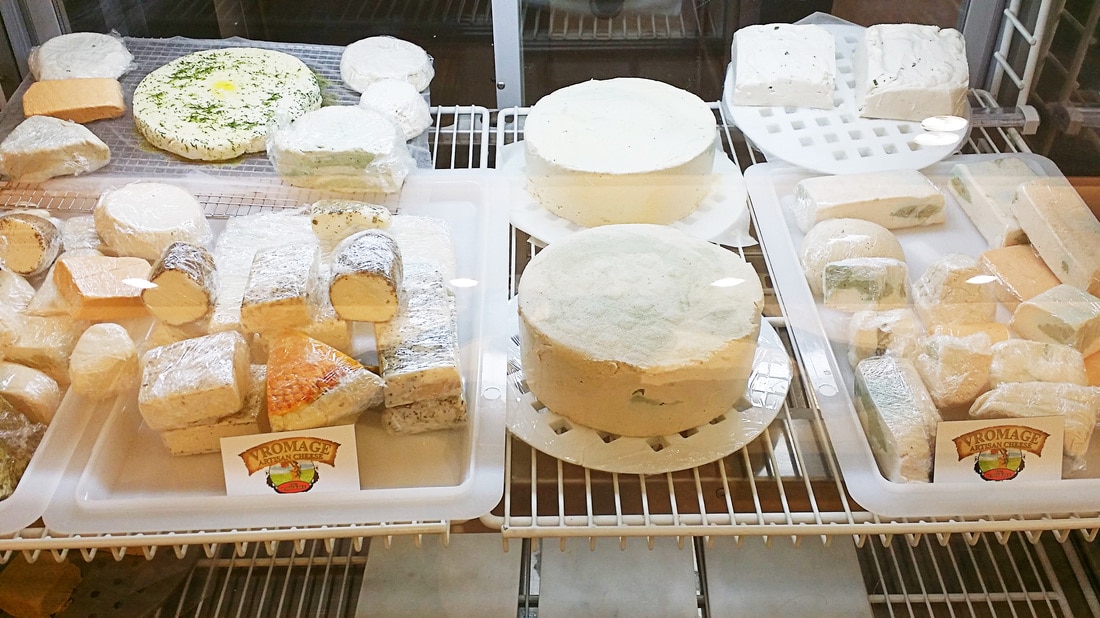
JP: We met by chance at Vromage, the vegan cheese shop in Los Angeles, earlier this year the day before the Academy Awards, and there was no special lighting. You looked great.
DW: Thanks. Yeah, I was nominated—and lost—for the 17th time. I was so bummed out, but I got more press in one day from that than I have in my entire life.
JP: And didn’t you receive an honorary Oscar in 2022 for your contributions to film music?
DW: I did. It was the first time they gave it to a songwriter in almost 100 years. They probably won’t do that again anytime soon. And that’s actually a harder one to get than a competitive Oscar, because you literally have to have all the people in the Academy choose you for that, and every year there are hundreds of people they put forward.
JP: So back to food, do you prefer to cook or dine out?
DW: No, I don’t know how to cook. I just go out to eat all of the time where I can just order what I want. Sometimes friends will cook, and if I go to their house, they will make sure there’s something I can eat.
JP: What are some of your favorite foods?
DW: I love pizza. There’s an Italian place here in Culver City called Julie Goes Green, and it has, as far as I’m concerned, the best vegan pizza in the city. So pizza is one of my favorite things to eat—plus tacos, French fries, all that kind of stuff.
JP: And what are some of the main staples in your pantry and in your fridge?
DW: I always have a lot of soup, and I like salads—I can make a salad—so I always have vegetables and other items to make a salad. I love pasta and any kind of noodles. There’s another place in LA called Au Lac that’s fantastic. It serves vegan Vietnamese food and has great noodles. That’s one of my favorites.
 Crossroads Kitchen
JP: What are some of your other favorite vegan restaurants in Los Angeles?
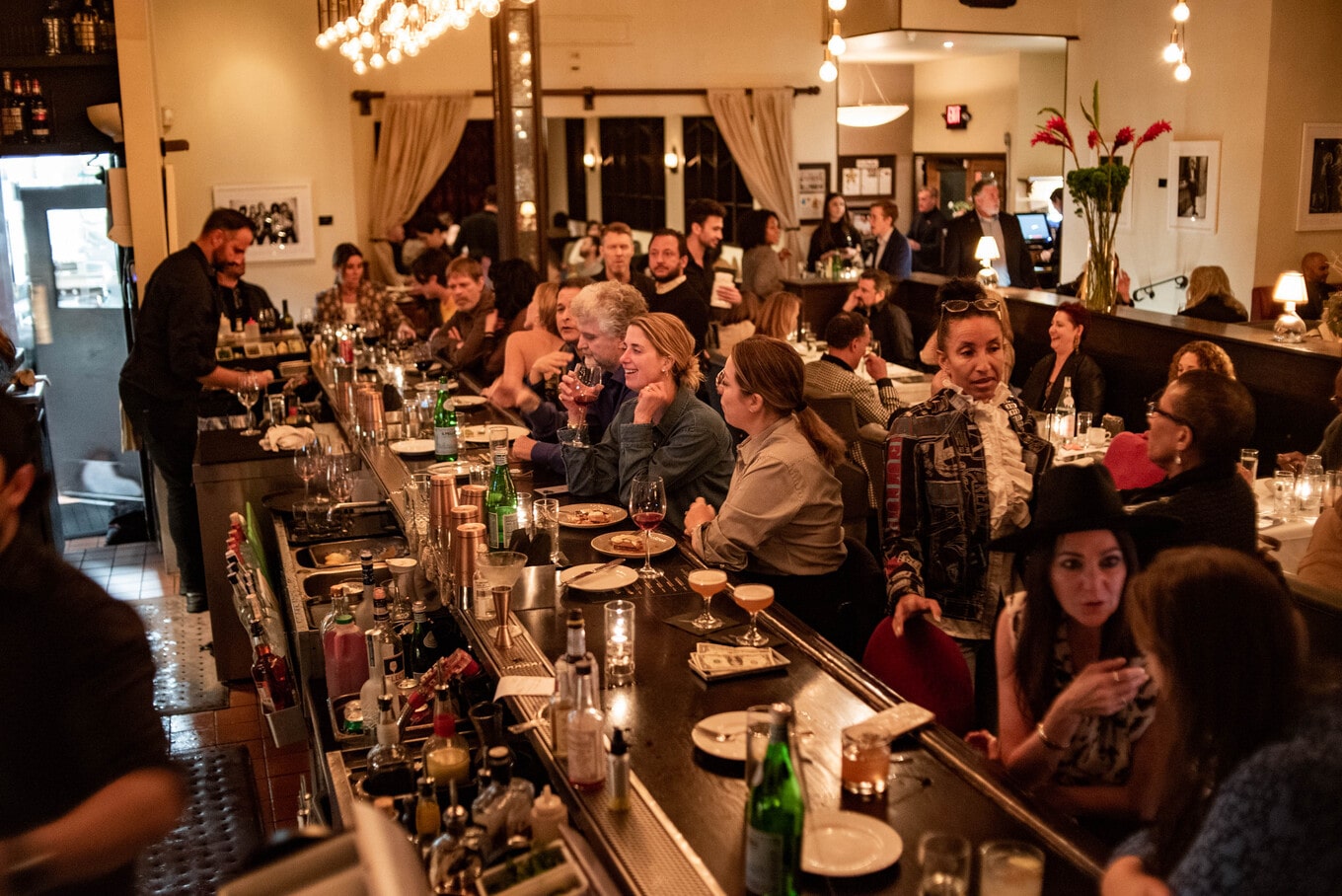
DW: So Julie Goes Green, Pura Vita, Gracias Madre, Crossroads Kitchen—I eat super fattening things there—and of course, Vromage. I love their artisanal cheeses, but also their sandwiches.
JP: What does the future of veganism look like to you? Are you hopeful?
DW: I’m hopeful, but it’s hard with human beings. I mean, look at the world right now. We’re destroying this world. We don’t deserve this earth. I think someday they’ll look back and go, God, they used to murder animals? Like, sentient beings, a beautiful animal that wants to live who is ripped apart from its mom. … I mean, I didn’t even know about the disgusting 4H Club, that they had these kids raise animals to be killed. I knew nothing about it. My friends and I decided to play hooky one day and go to a casino, and we stopped in this town on the way and a little boy had this little lamb. I said, “What’s the story? Is that your pet?” and he goes, “No, we’re taking it to the county fair to slaughter.” And I was like “What? That cute little thing?” I tried to buy it, but the parents wouldn’t sell it to me. I ended up getting it and saving it, but you don’t even know all the stuff we had to go through. These cute little things you pet at the county fair are all going to be killed. People don’t know that, and it’s so sad. It’s child abuse, actually. You’re having a kid raise a baby to be killed. They’re indoctrinated. You’re teaching them that murder is okay.
JP: Your passion for animals is so evident, and with the Diane Warren Foundation, you clearly walk the walk. Tell us about your foundation, which is largely dedicated to protecting and saving animals.
DW: It’s what I could do to give back, and I want to give back to animals—including to get animals out of shelters, which is another thing that I can’t believe, that they kill healthy animals at some shelters. The fact that someone would take their pet there to be killed. Anybody who takes animals out of shelters to save their lives—they’re heroes as far as I’m concerned. The other heroes are people who break into labs where animals are tested on, since what they do to those animals is horrible. I do not like this administration at all, but I was watching someone from the FDA on the news this morning saying how cruel animal testing is and they want to address that, and I was like, oh, well that’s one good thing. Let’s see if they really do anything with that.
 Diane Warren | Instagram
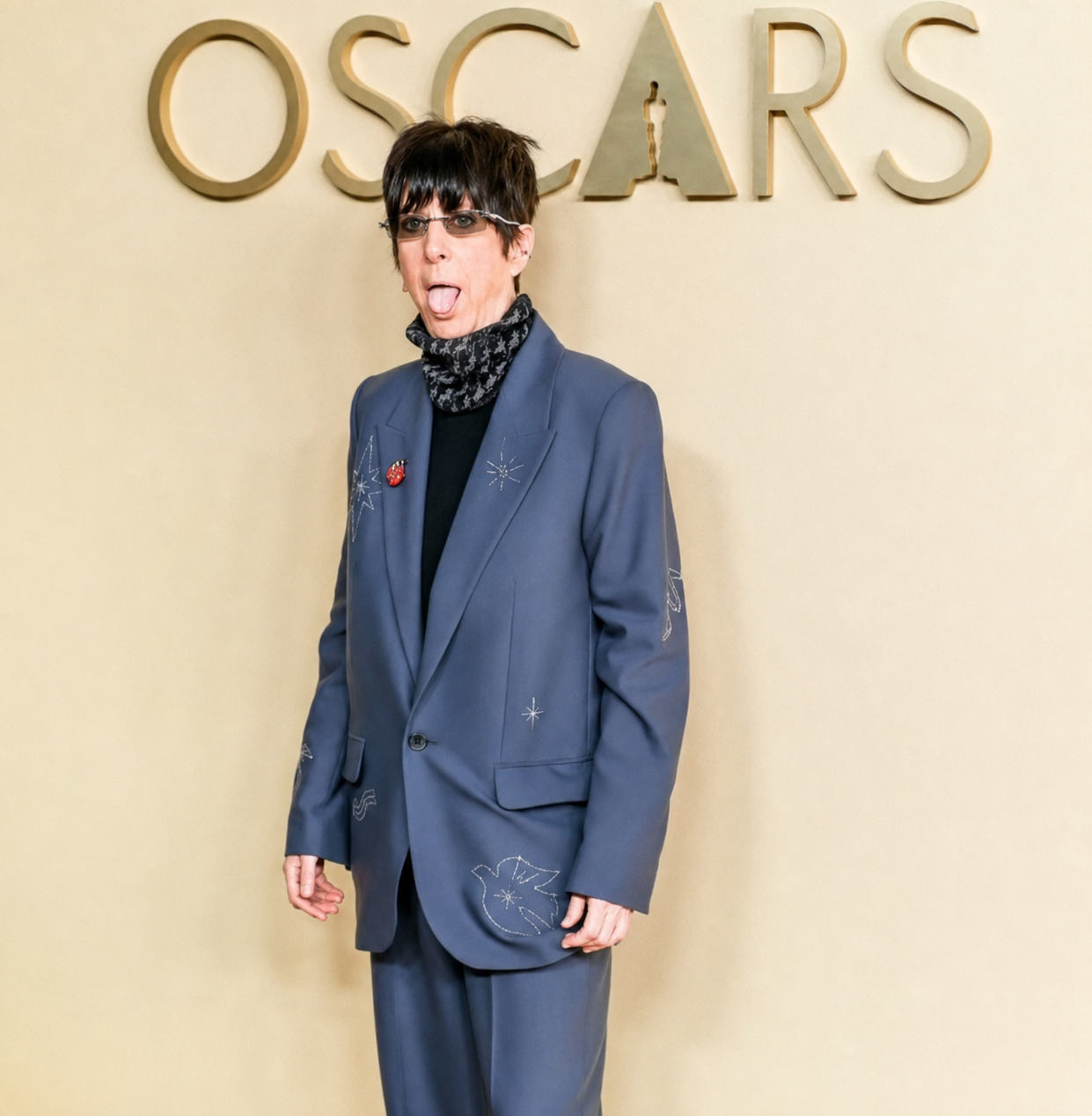
JP: You’ve won so many awards, have a star on the Hollywood Walk of Fame, and been on the Billboard charts more times than most. But you didn’t win that Academy Award this year for what was your 17th nomination for your song “Dear Me,” performed by Kesha in your new documentary. How does that affect you, and where does the drive come from to continue to write?
DW: I just go to work. I was at work the next day. I mean, I set a record this year for being the most-nominated person in Oscar history without a win, so it’s okay because I set a record [laughs]. And I mean, I’ve been nominated 17 times, which means my peers have chosen my songs 17 times, which is a big deal. It’s hard to get nominated one time for an Oscar. So 17 times over the course of five decades isn’t bad. The day after I lost, I was a little down, you know? I was kind of bummed that the award ceremony performed two [of the nominated] songs live, and didn’t perform three of them—including mine. I think they played 15 seconds of my song or something. But like I said, I was back at work the next day. This is what I do. I show up, and I go to work—and onward, onto the next day
For more plant-based stories like this, read:
JUMP TO ... Latest News | Recipes | Guides | Health | Subscribe
Juliet Pennington is a Boston-based journalist and educator who is passionate about all-things vegan.