


Erling Haaland, one of the breakout soccer stars of the 2026 World Cup, is serious about his health. In fact, in the documentary Haaland: The Big Decision, the world-class athlete explains that he regularly fuels up on foods like cow hearts, raw milk, and liver to ensure he’s in tip-top shape for the field.
“I am concerned with taking care of my body,” he says, before noting: “I think eating quality food that is as local as possible is the most important.”
Many would agree. Avoiding ultra-processed foods in favor of locally sourced, whole foods isn’t just beneficial for athletes; research has repeatedly shown that doing so can reduce the risk of chronic diseases, including heart disease and colorectal cancer.
But while Haaland, who eats 6,000 calories a day, is a staunch carnivore, some experts have expressed concern about the sheer amount of animal products in his diet.
 Bryan Berlin / Wikimedia Commons
The health risks of the Erling Haaland diet
In a recent episode of The Exam Room by the Physicians Committee podcast, Neal Barnard, MD, founder and president of the Physicians Committee for Responsible Medicine, described Haaland’s diet as “dirty fuel.”
“Where an athlete really runs into trouble is that they are pushing the calories through their body so much, it’s sort of like, let’s say you’re fueling your car and you’re running it a lot,” he explained. “If that fuel has impurities in it and you’re using a lot of that impure fuel, you’re going to hurt that engine.”
Those impurities, according to Barnard, include saturated fat and cholesterol, both of which are linked with an increased risk of heart disease and are consumed in high amounts on a carnivore diet.
“You can look really, really, really healthy on the outside, but clearly you can’t see underneath all of that muscle definition how those arteries are looking,” added Barnard, who also expressed concern about Haaland’s penchant for raw milk. He described it as “danger in a bottle” due to the bacterial threat.
Raw milk isn’t pasteurized, which means it may contain harmful bacteria, including E. coli and Listeria.
The growing popularity of carnivore-forward diets
Haaland isn’t alone in adopting a carnivore-heavy approach to diet. Thanks in part to social media, it has become an increasingly popular way of eating in recent years.
In 2025, a report from environmental action nonprofit Hubbub found that young men in the UK between the ages of 16 and 24 were three times more likely than the general population to have increased their meat intake in the previous year.
Barnard isn’t alone in raising concerns about the diet.
“In a strict carnivore diet whereby no plant foods are allowed, the body is stripped of any opportunity to have phytonutrients that protect us from cancer and many chronic diseases,” Angel Luk, RD, of Food Mysteries, recently told VegNews. “These phytonutrients are exclusively found in plants.”
Haaland hasn’t claimed that he doesn’t eat plants, it’s important to note, but there’s no doubt his diet is animal-heavy.
More athletes embrace plant-based foods
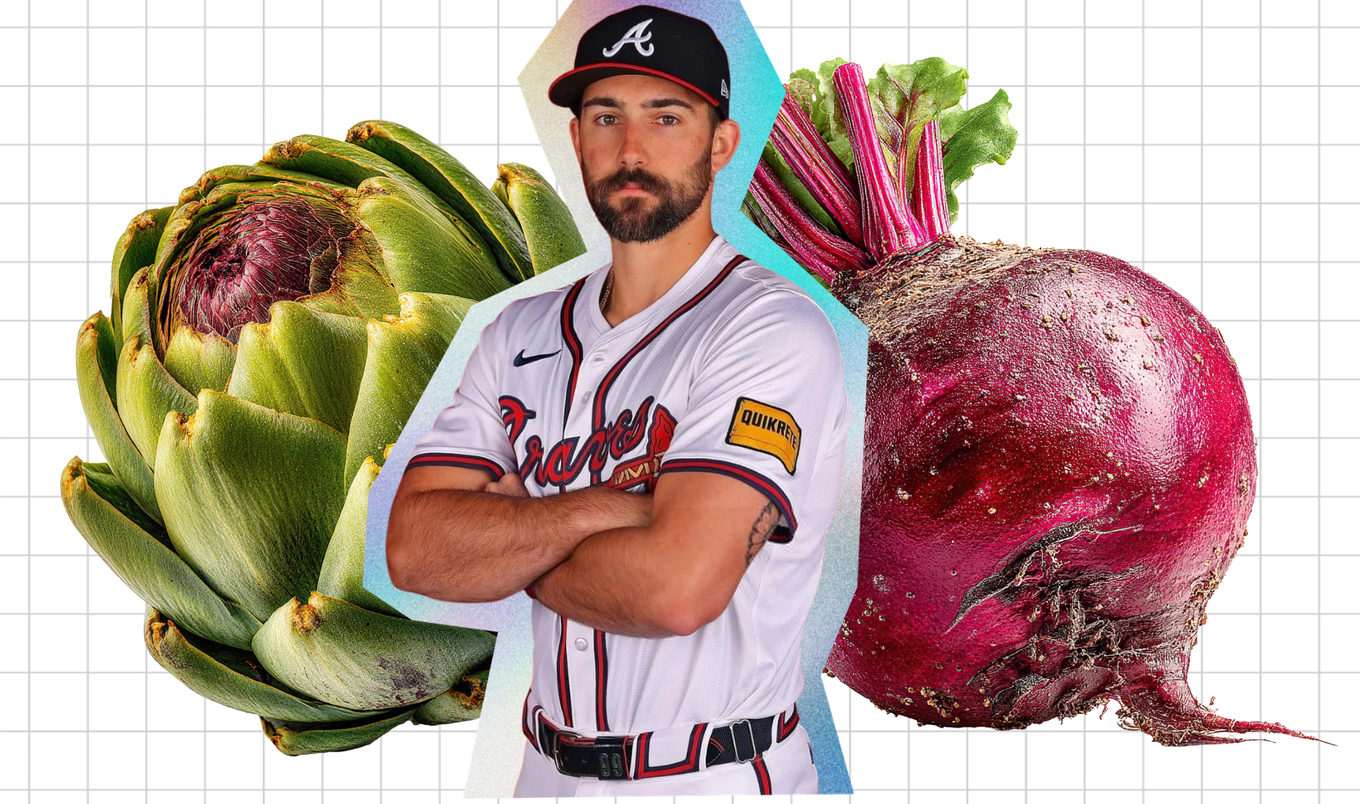
In contrast to Haaland, many athletes are embracing a plant-based approach instead. Soccer player Chris Smalling is a vocal advocate for a plant-based diet, and Atlanta Braves baseball pitcher Spencer Strider claims eating this way has improved his health and recovery time.
It makes sense: Plant-based foods are rich in essential nutrients, antioxidants, and fiber. As a physician, Barnard has helped transform the health of hundreds of patients by focusing on a nutrient-dense, whole-food, plant-based diet. His explanation of why is pretty simple: Cut out the middleman, and alongside it, the extra cholesterol and saturated fat.
“Keep in mind, yes, there is iron in liver. The cow didn’t make iron. The cow doesn’t manufacture iron. The cow cannot make it. Iron is an element. Iron is in the ground. And the iron goes into the roots of grass and gets into the blades of the grass,” Barnard explained. “And then the cow eats the grass, and then the iron gets stored in the liver. And if they eat a lot of it, they store a lot of it, and then you can get it from that source.”
He added: “But what Mother Nature thought you were going to do is eat the plant—not grass, but hopefully the more palatable plants.”
For more plant-based stories like this, read:
JUMP TO ... Latest News | Recipes | Guides | Health | Subscribe

Charlotte is a VegNews editor and writer based in sunny Southsea on England's southern coast.