


The newly released HBO documentary It’s Never Over, Jeff Buckley offers an intimate portrait of Jeff Buckley—a voice that stirred the ’90s music scene—and revisits his final days with fresh context.
On the day he was scheduled to begin recording a second album, Buckley waded into a tributary of the Mississippi River near Memphis, TN—and was swept under by a passing boat’s wake. An autopsy ruled his death an accidental drowning.
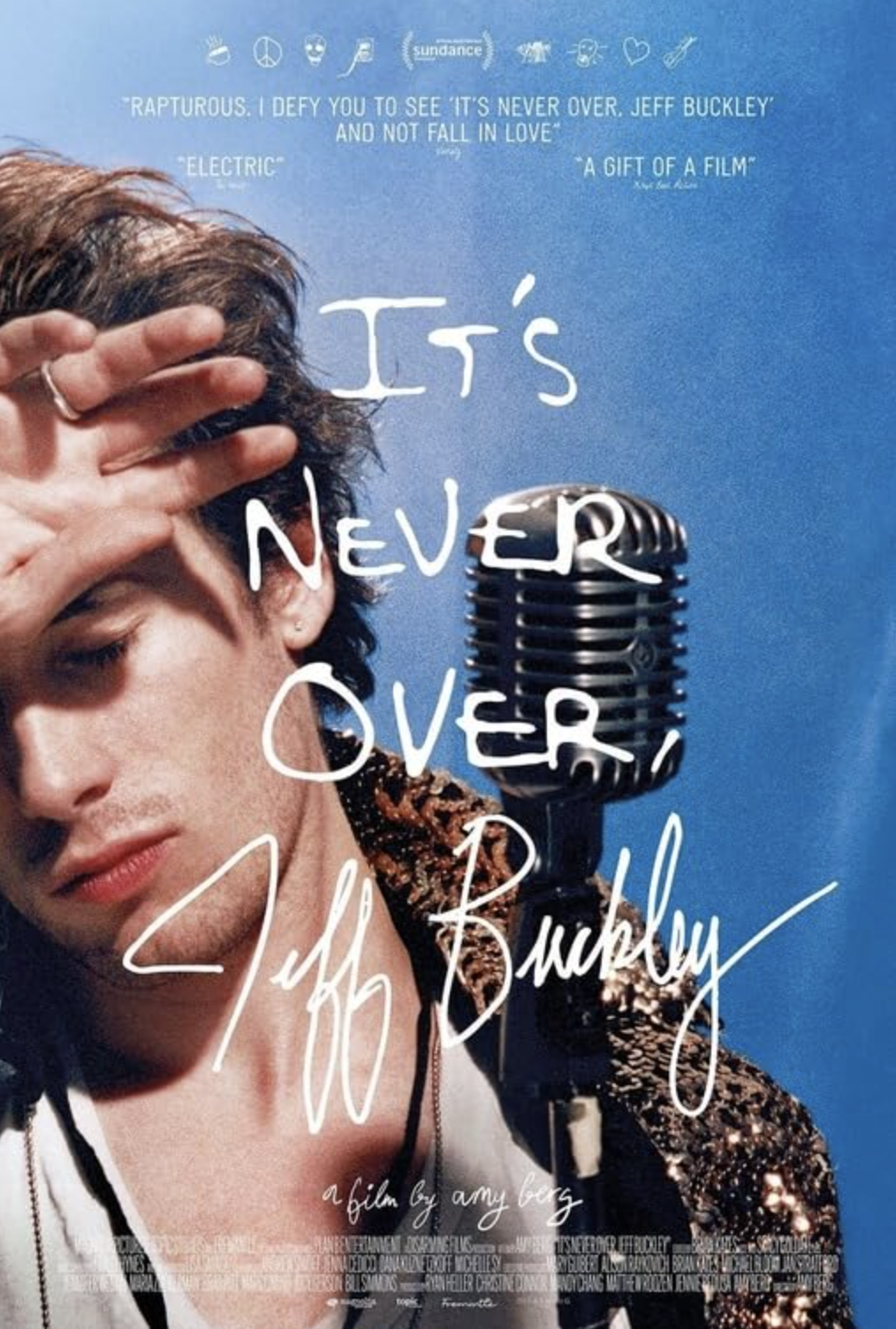 ‘It’s Never Over, Jeff Buckley’ | Magnolia Pictures, HBO
According to a new short film coinciding with the documentary’s release, less than 24 hours before his tragic drowning in 1997 at age 30, Buckley reportedly told his former partner, Rebecca Moore, that he was “stopping eating animals.”
‘From Art to Avians’
Alongside the full-length documentary, the ten-minute short From Art to Avians adds dimension to Buckley’s story by tracing Moore’s own trajectory. Once immersed in New York’s avant-garde performance scene, Buckley’s former partner went on to found the Institute for Animal Happiness, a rescue in Upstate New York devoted primarily to disabled chickens. The short film about Moore, co-directed by Amy Berg, who also directed It’s Never Over, underscores the emotional and philosophical continuity between Moore’s years with Buckley and the life she built afterward.
Moore’s relationship with Buckley is depicted as deeply formative, marked by an unusual closeness that lasted beyond their breakup. The short positions their final conversation not as a dramatic premonition, but as the culmination of an ongoing exchange about responsibility, creativity, and care for living beings.
The pairing of the two films offers a more layered look at Buckley’s inner world. While the documentary charts his rise following the release of Grace—arguably one of the most acclaimed albums of the 1990s—it also highlights his search for grounding as commercial expectations increased. The short provides a quieter counterbalance, returning attention to the personal connections that shaped him.
Together, they broaden the frame through which fans encounter Buckley’s legacy. They show not only a musician whose voice drew praise from icons such as David Bowie, Robert Plant, Jimmy Page, and Bob Dylan, but also a person reassessing his relationship to animals and to himself during a pivotal moment. For longtime admirers and those discovering him for the first time, this additional material deepens the narrative surrounding his final day.
‘It’s Never Over’
The HBO documentary It’s Never Over draws on rare archival footage, home videos, journal entries, old voicemail messages, and voices of people who knew Buckley best: his mother, Mary Guibert; former partners Joan Wasser as well as Moore; and his former bandmates. In one sequence from the trailer, an off-camera voice asks Buckley: “How would you like your fans to think of you?”
He replies plainly, “Just the music. Because when I’m dead, that’s the only thing that’ll be around.”
The film doesn’t avoid the darker aspects of Buckley’s story. It candidly portrays the crushing pressure he felt after the success of Grace. Critics praise the documentary for balancing Buckley’s experimental spirit and vocal brilliance with a portrait of a man often overwhelmed by expectation and fragile mental health.
Fans and newcomers alike will see a fuller picture: a man struggling to remain true to himself, while wrestling with fame’s demands—and perhaps beginning a journey toward more mindful living. “This person was so magical,” Moore said. “It opened up a world of love and possibility for both of us.”
For more plant-based stories like this, read:
JUMP TO ... Latest News | Recipes | Guides | Health | Subscribe