


For most modern cookware brands, ensuring materials are free of toxins is a priority. Buzz words like “non-toxic” and “chemical-free” come with a promise: this item won’t damage your health. It doesn’t contain nefarious forever chemicals. It’s safe.
Many consumers are actively searching for these non-toxic cookware options, and demand is rising fast. The non-stick cookware market—which includes popular “non-toxic” materials like stainless steel and cast iron—is projected to grow from $19.6 billion in 2024 to $27.4 billion by 2030.
However, modern non-toxic cookware isn’t without its issues. Some brands that market themselves as toxin-free have tested positive for contaminants such as lead, mercury, and siloxanes (silicone-based compounds). Others are labeled “non-toxic” yet still contain polytetrafluoroethylene (PTFE), better known as Teflon. While PTFE is generally recognized as safe under normal use, studies have linked exposure to overheated Teflon with lung damage and flu-like symptoms, including fever and headaches.
When the non-toxic cookware brand P·TAL appeared on Shark Tank India, it offered a markedly different approach. Rather than pitching another ceramic-coated pan or synthetic non-stick surface, the company showcased cookware made from hand-hammered copper, brass, and bronze, crafted using traditional techniques passed down through generations over hundreds of years.
The Shark Tank appearance helped bring long-overlooked artisanal metals into the spotlight—and sparked a larger conversation about what “non-toxic cookware” should really mean.
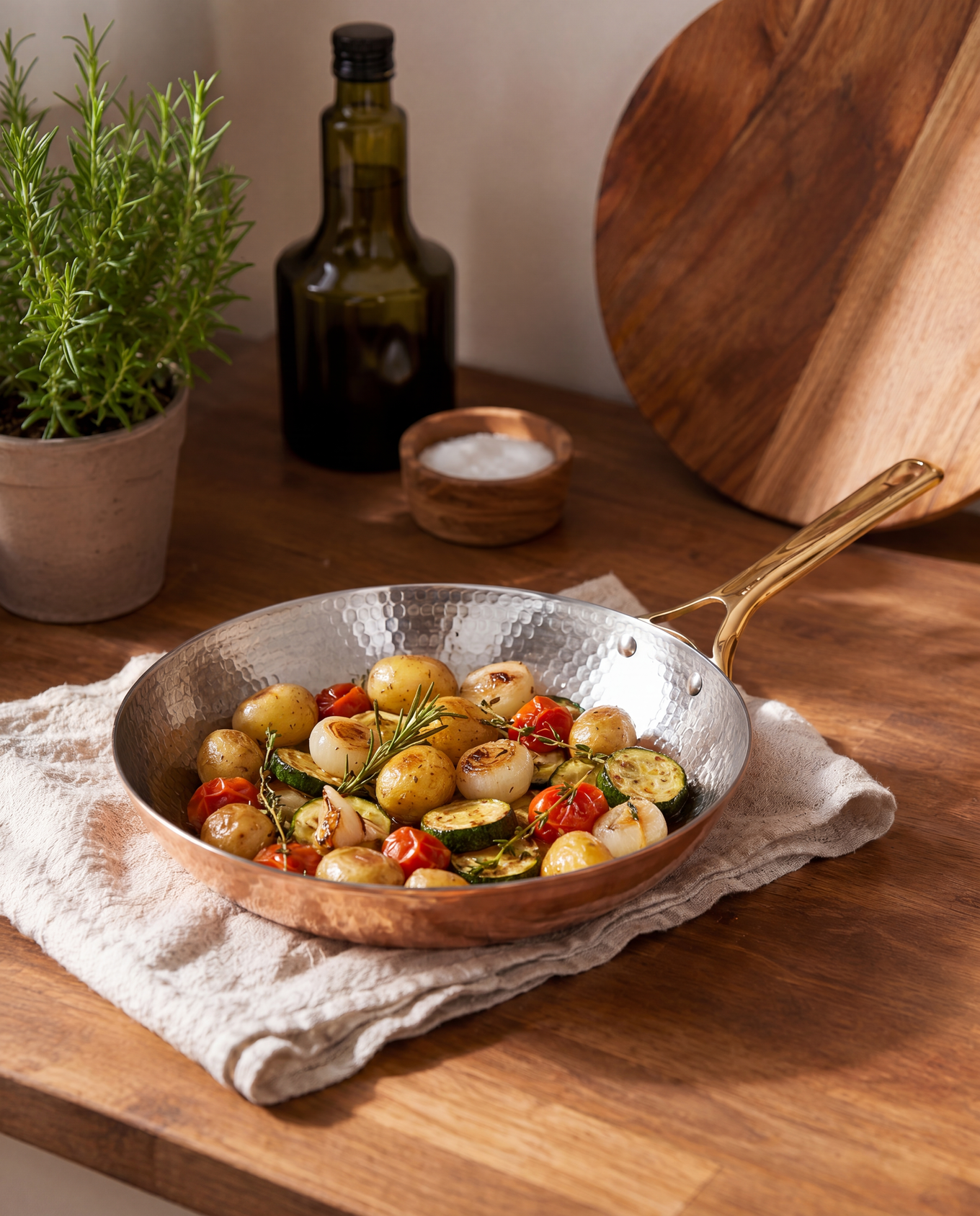 In Ayurveda, traditional metals like copper, brass, and bronze are associated with many wellness benefits.
Are there benefits to cooking with copper?
Long before “non-toxic” became a marketing term, cooks relied on traditional metals like copper, brass, and bronze. These materials weren’t just chosen for safety—they were chosen for performance, durability, and wellness. Copper, in particular, has long been a firm favorite of many chefs, from Alain Ducasse to Julia Child. It offers superior heat distribution and responsiveness, consistently outperforming stainless steel when it comes to precision cooking. Copper is not a trend-driven material, but a time-tested tool endured for centuries.
“The idea has been to modernize these metals, help provide for a community of craftsmen, and at the same time, ensure that people in today’s age can adopt the wellness benefits associated with these traditional metals,” Aditya Agrawal, co-founder of P·TAL, told VegNews.
According to Ayurveda, an ancient system of medicine from India, metals like copper, brass, and bronze are believed to support health in multiple ways. They are thought to help balance the body’s three doshas—vata, kapha, and pitta—each made up of foundational elements like earth, air, and space. When these doshas are in balance, so is our physiological, mental, and emotional well-being.
These metals are also traditionally associated with anti-inflammatory, antimicrobial, antibacterial, and detoxifying properties. In simple terms, Ayurvedic belief holds that they help remove toxicity, reduce inflammation, and protect the body from infection.
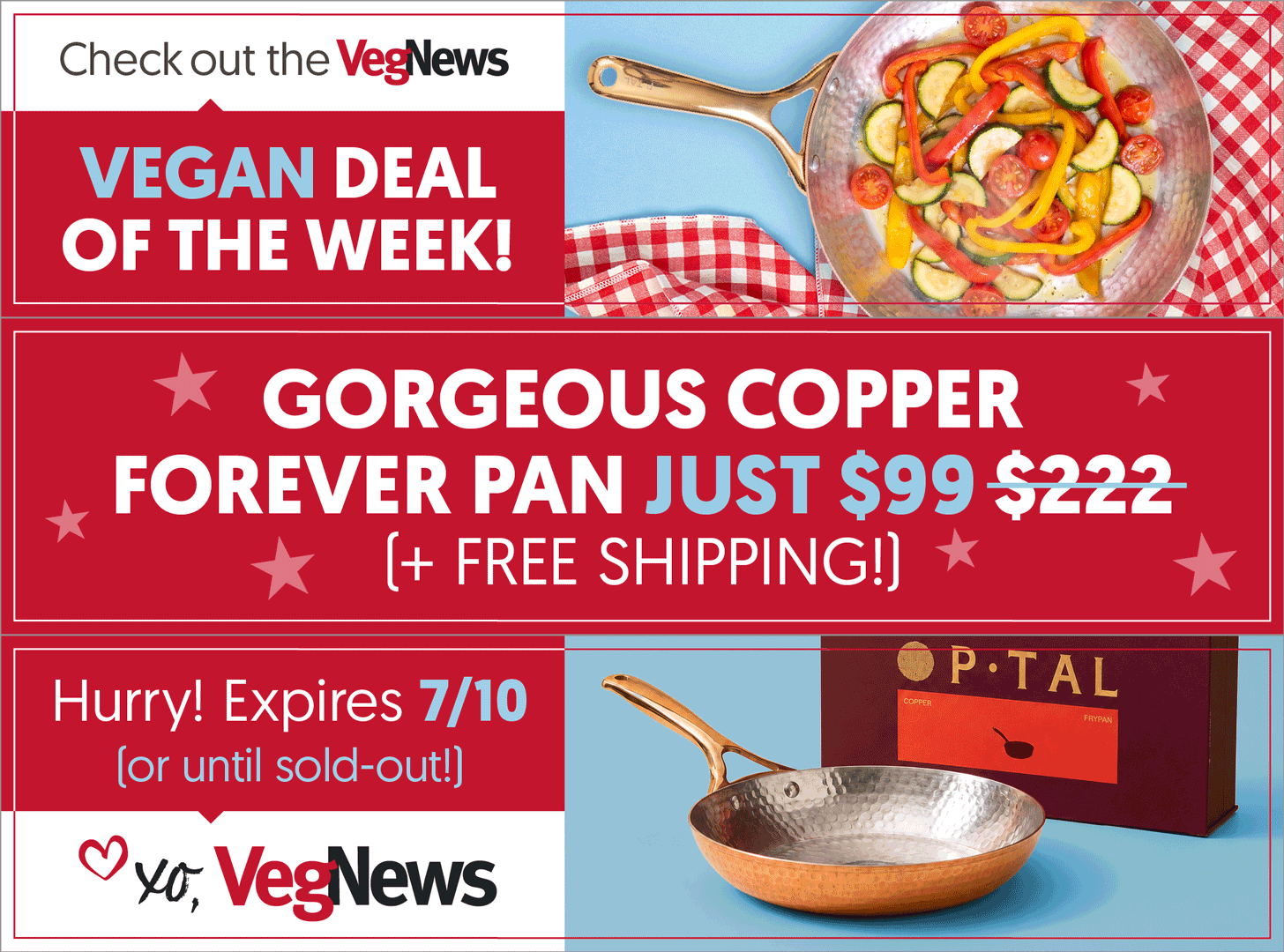
Most of the claimed health benefits of traditional metals stem from long-held belief systems, and modern scientific research remains limited. That said, some evidence does exist. A study published in Applied and Environmental Microbiology confirmed that copper surfaces naturally kill bacteria.
Ayurvedic practitioners go further. Ayurvedic physician Perumbuduri Naresh told Vogue India that brass may increase strength and immunity, while bronze has traditionally been associated with improved eyesight and skin health. He also noted that copper pots are commonly used for cooking rice and are believed to support digestion and metabolism—claims rooted in centuries-old practice rather than modern clinical trials.
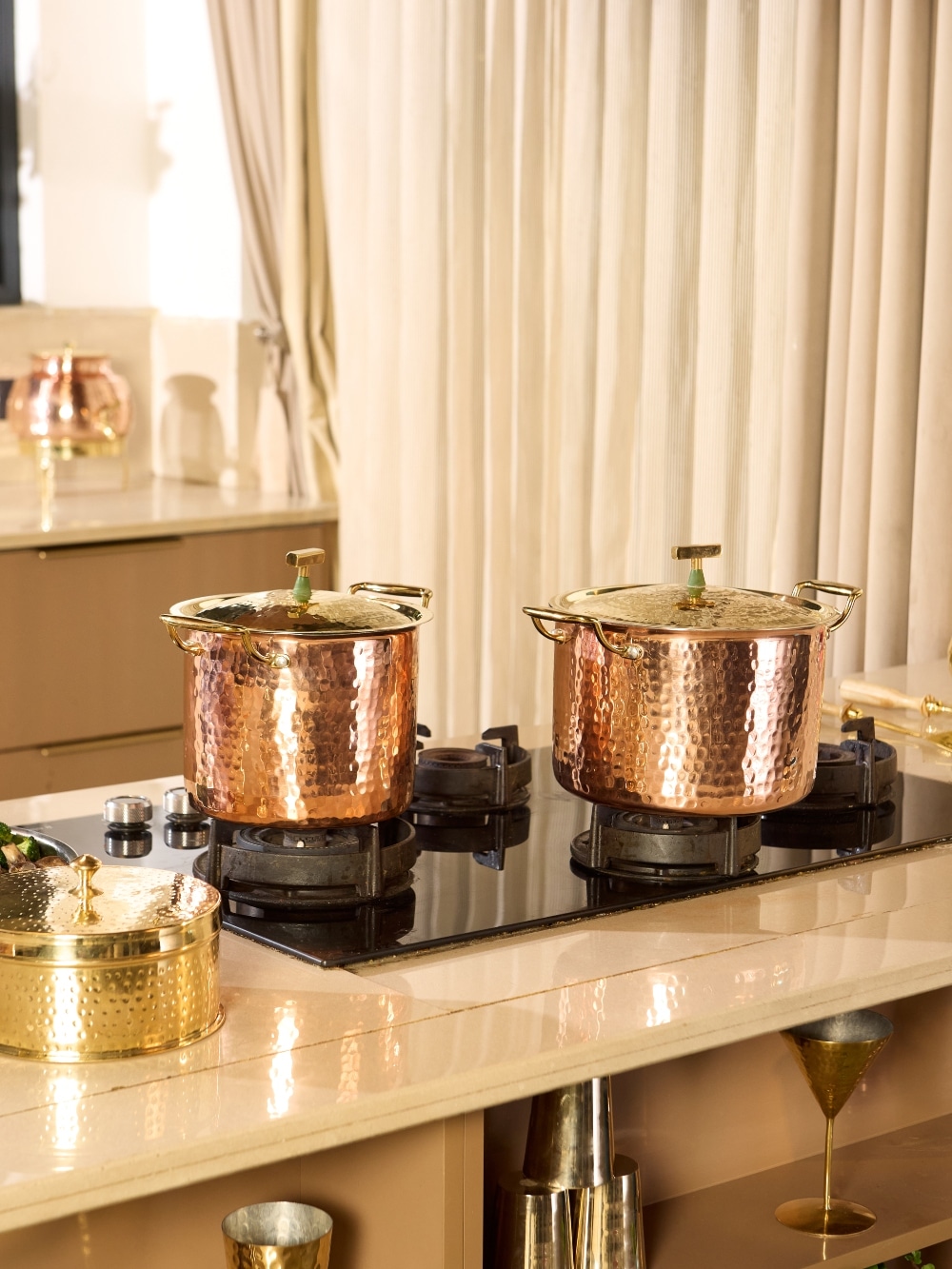 P·TAL’s cookware is handcrafted by artisans in Jandiala Guru, Punjab.
Preserving an ancient craft
P·TAL’s cookware is handcrafted by thatheras from Jandiala Guru, Punjab. These highly skilled artisans have been creating utensils from copper, brass, and kansa (a type of bronze) for nearly 200 years. In 2014, their craft was inscribed on UNESCO’s Representative List of the Intangible Cultural Heritage of Humanity.
Thanks to their skill and craftsmanship, the brand’s traditional metal cookware is built to last. With proper care, copper, brass, and bronze pieces can outlive their owners, becoming heirlooms passed down through generations. This stands in stark contrast to much of today’s cookware, which is often replaced after just a few years of use.
“Seeing the products being handcrafted in a small state in Punjab and getting to the homes and kitchens of America—it’s something that the artisans feel so excited about and so proud of,” Agrawal said.
That longevity matters. As fast homeware continues to grow, millions of tons of household goods end up in landfills every year in the United States alone. Durable cookware isn’t just a better investment—it’s a more sustainable choice.
“A lot of consumers we speak to in the US say that their ceramic or stainless steel cookware goes to waste in a couple of years,” Agrawal said. “In fact, for some of them, it goes to waste in five to six months. It’s not that durable. But when it comes to copper? This is something that will actually last for generations.”
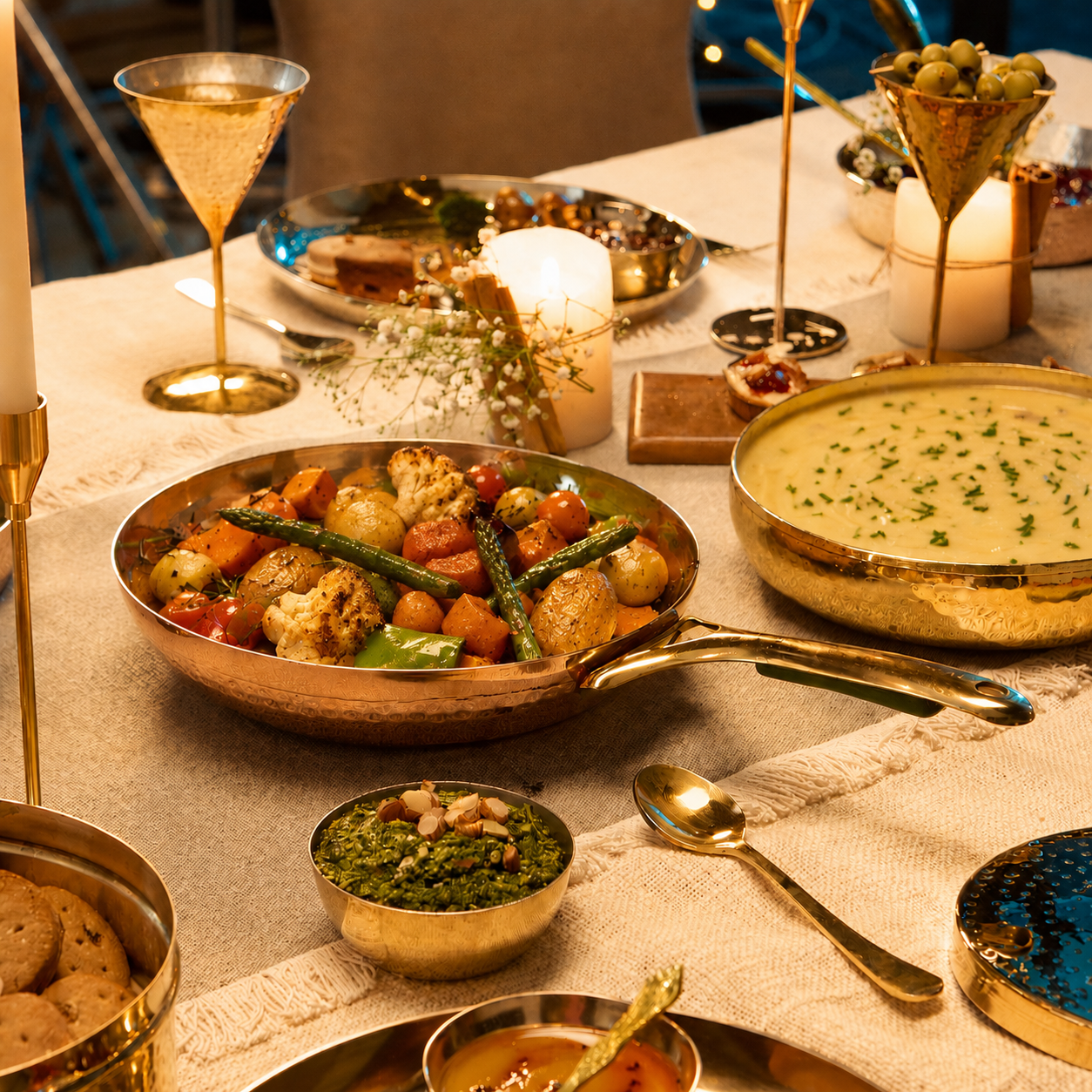 P·TAL is focused on bringing its handcrafted traditional metal cookware to an American audience.
The brand is now exploring buy-back and recycling programs to ensure these metals remain within its own production chain, rather than becoming waste.
The renewed interest in copper and traditional metals reflects a broader shift in how we define healthy cookware. True non-toxic cookware isn’t just about what’s missing—it’s about what’s intentionally included: materials with history, performance, and cultural meaning. Long before modern certifications and coatings, cooks trusted these metals with their food. Today, as consumers look beyond buzz words, that ancient tradition is finding new relevance in modern kitchens.
P·TAL is grateful to Shark Tank India for the platform, but also to its American consumers for welcoming its products into their homes. In the next year, P·TAL plans to have sold products to more than 5 million American families.
“We see more than 30 percent of American customers making their second purchases within a span of six months,” says Agrawal. “The people in the US have given back to us in many ways. And we are very grateful for the love and appreciation we have received so far.”
Thank you to P·TAL for partnering with VegNews on this story.
For more plant-based stories like this, read:
JUMP TO ... Latest News | Recipes | Guides | Health | Subscribe

Charlotte is a VegNews editor and writer based in sunny Southsea on England's southern coast.