


When many restaurateurs speak about new openings, it can sound like wide-eyed optimism. After all, as many as 30 percent of restaurants will close within their first year, with 60 to 80 percent unlikely to hit the five-year mark. But when Ravi DeRossi talks about new restaurants, it sounds more like persistence—a choice to stay in a business under pressure, even when that pressure is unbearably restrictive.
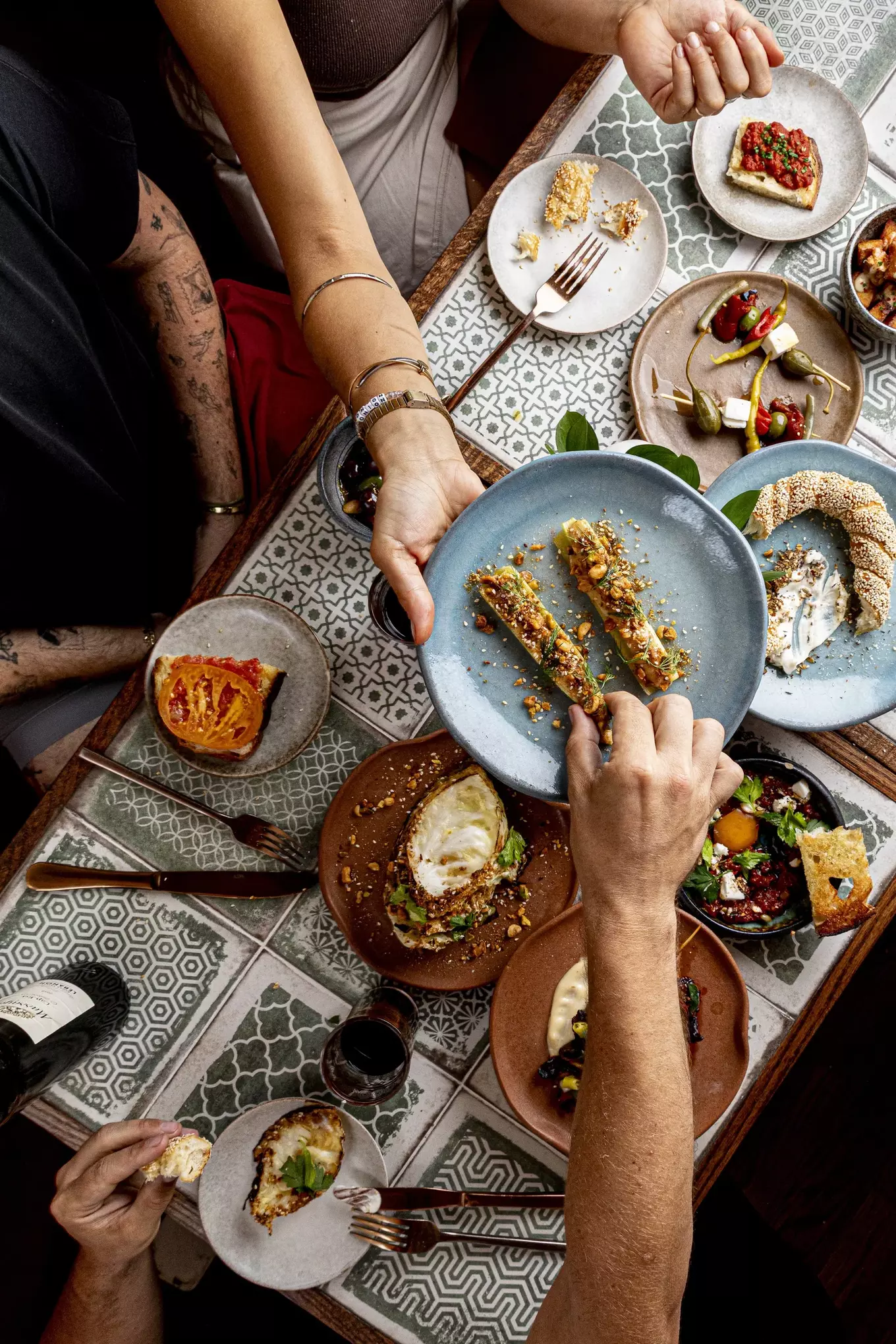 Al-Andalus
DeRossi is co-founder and CEO of Overthrow Hospitality, the New York restaurant group behind a string of vegan concepts ranging from a mushroom-themed restaurant to a ”vegetable bar” and a Michelin Bib Gourmand-awarded natural wine bar. Its newest ventures, the Lower East Side stunner Al-Andalus, draws inspiration from 16th-century Andalusian cuisine, while Long Count expands the group’s wine bar theme. But across all locations, DeRossi spirits a process driven by intuition, collaboration, and a willingness to build in uncertain times.
The vegan restaurant downturn
DeRossi’s outlook sits against a backdrop of upheaval in the restaurant industry, both broadly and significantly within the plant-based sector. According to the National Restaurant Association, more than 90,000 US restaurants closed between 2020 and 2024 as a result of pandemic disruption, followed by rising labor costs, rent increases, and inflationary pressures.
Vegan restaurants have been especially exposed to those pressures. Last year wasn’t much better for some of the biggest names in the space. In Seattle, Plum Bistro—a longtime anchor of the city’s vegan dining scene—closed after nearly two decades in operation. In nearby Portland, Paradox Café, one of the city’s earliest vegetarian restaurants, shuttered after a 30-year run.
Los Angeles has lost popular destinations, including Nic’s on Beverly, Little Pine, Sugar Taco, and the critically acclaimed Kusaki. Chicago lost four spots: Kitchen 17, Native Foods, Chicago Raw, and one Chicago Diner location.
DeRossi’s New York has seen its share of losses, too. Candle Cafe, Champs Diner, and Cadence have shuttered. Modern Love Brooklyn announced its closure after eight years, with founder Isa Chandra Moskowitz pointing to the structural challenges facing full-service restaurants and the economics of third-party delivery platforms.
“It’s impossible to absorb the cuts that third-party apps take,” Moskowitz told Eater last spring.
And at the fine-dining level, the shift has also been visible. Los Angeles’ legendary Crossroads Kitchen shut its Calabasas location in 2024 (even with frequent Kardashian sightings). New York’s Eleven Madison Park, which gained international attention when it moved to an entirely plant-based tasting menu in 2021, confirmed last year that it would reintroduce select meat and fish dishes, citing the need to broaden demand and stabilize reservations.
The contraction is significant, especially with the loss of so many iconic spots—including several in the Overthrow Hospitality group—but plant-based dining is still a destination. IBISWorld estimates that there were more than 32,000 vegetarian and vegan restaurant businesses operating in the US in 2025. And vegan options are now common on conventional restaurant menus at fast-food giants like Burger King and Taco Bell, as well as steakhouses and Michelin-starred destinations.
Opening without a fixed roadmap
For DeRossi, though, opening new locations isn’t about filling the voids left by these closures, but rather, creating new spaces that haven’t been done before. “I don’t think we actually ever decide which new concept to open, it just sorta happens,” DeRossi says. For him and his Overthrow co-founder, Drew Brady, ideas circulate constantly. At any moment, they are juggling a dozen or more concepts in conversation, but nothing advances without people first.
“The hardest part of any of this is finding the right chef to work with for a new concept. And then finding the right space,” he says. Only then do ideas start to take form.
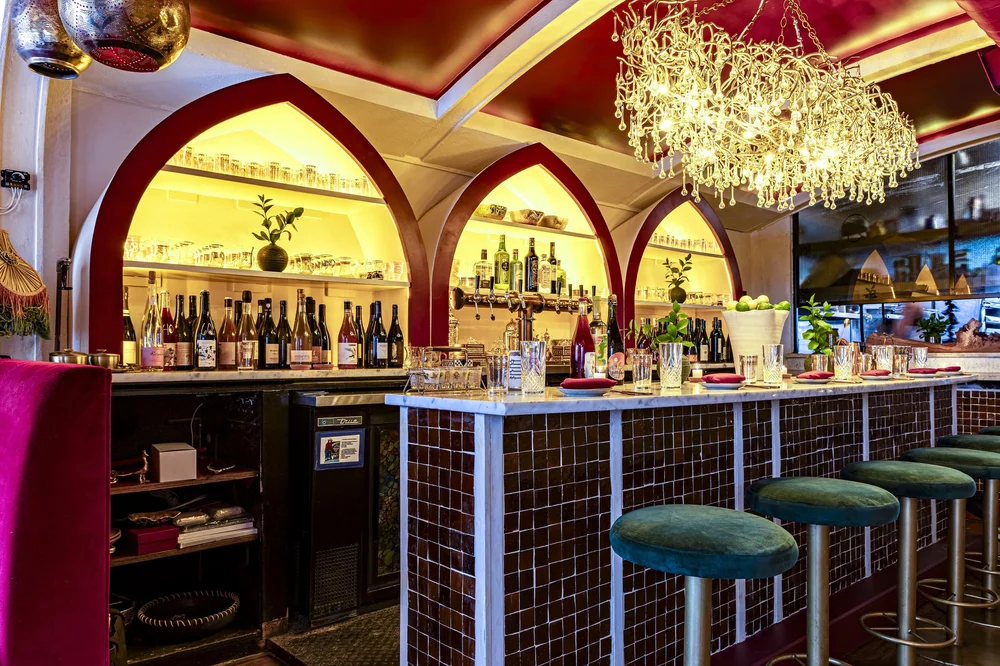 Al-Andalus
“When the right chef comes along, someone we really want to work with, we will all brainstorm ideas together,” DeRossi says. If the group lands on something that excites them, they begin searching for a location. Spatial fit matters as much as conceptual fit. “There have been times we had the right chef, the perfect concept, then we find a space that just doesn’t suit it for some reason and we change it up last minute.”
For better or worse, he says, “we go with our gut. We do what feels best.” Overthrow is also expanding into new cities in 2026. “We have one very successful concept in New York City that will be opening soon in Denver first and then in other cities around the country.”
BECOME A VEGNEWS VIP: Get exclusive product deals, freebies, and perks galore!
Crowds respond quickly to space, energy, and tone. DeRossi and Brady aim to create environments they personally enjoy. “We just build the places that we want to hang out at,” DeRossi says. “We design spaces that we want to spend time in, we play music that we want to listen to, we set the lights at the level we want to be in.” He notes that millions of guests have gravitated toward those sensibilities because they feel so authentic.
For a founder whose career began outside hospitality, that instinctual orientation has always been central. Before restaurants, DeRossi considered himself an artist.
“Creativity is the one commodity that I will never run out of,” he says. Art, and now hospitality, are means of expression rather than ends in themselves.
At one point, DeRossi was overseeing roughly 15 venues in New York. “I was making a ton of money, but I was absolutely miserable,” he says. Converting the whole business to vegan restaurants and embedding community and planet-oriented work, he says, changed how he felt about his life and work.
This philosophy extends into how Overthrow operates. DeRossi works with a set of core values that guide decision-making across teams and situations. “We have always believed that leading from the back of the line is the way to go,” he says. Staff are encouraged to refer to those values in everyday choices rather than relying on close supervision. “If they allow our core values to help dictate the answer, it will always be the correct way.”
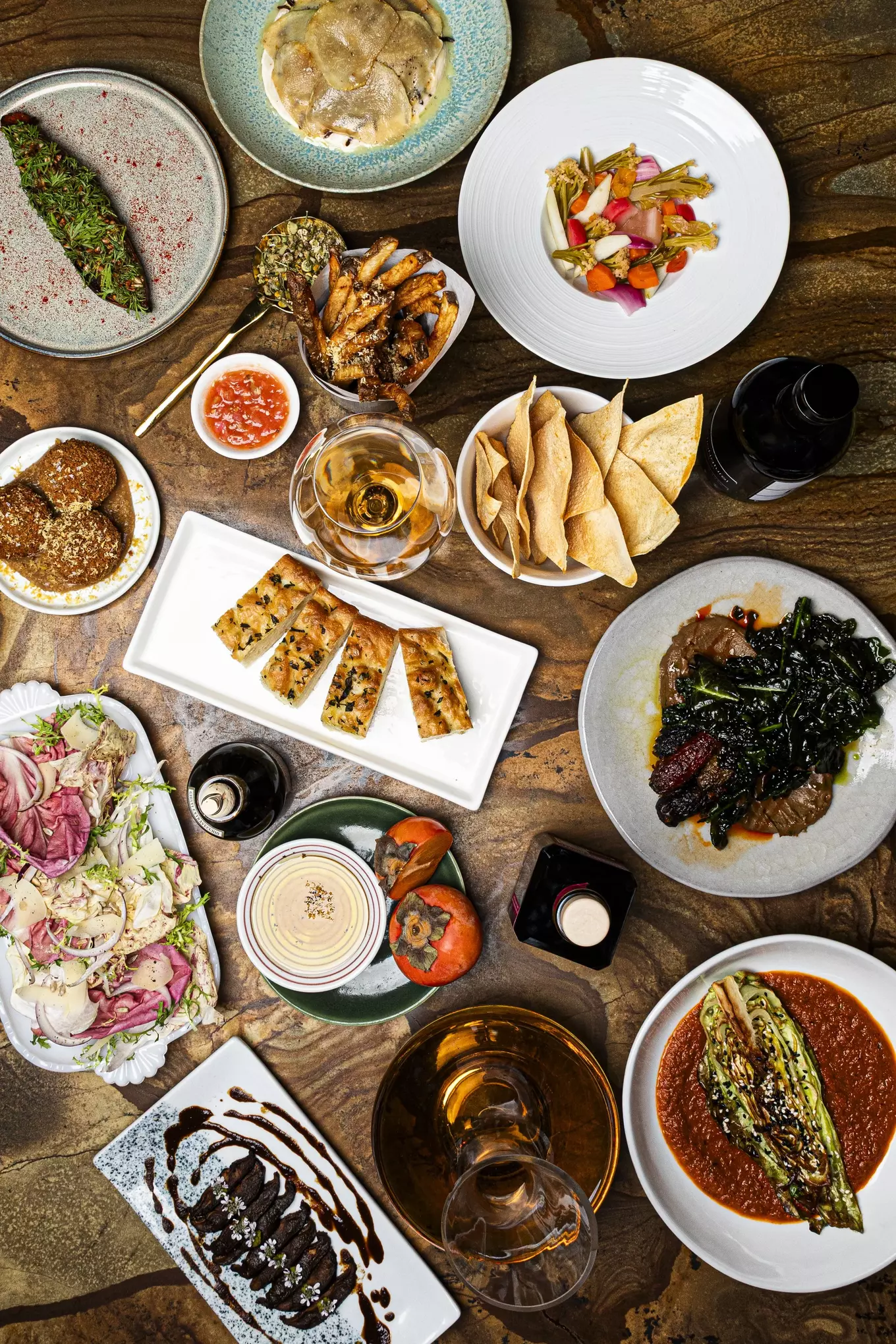 Loung Count
Collaboration, he says, must begin with respect. “We have a strict ‘no assholes’ rule when it comes to who we decide to work with. I have worked with some awful people in the past, and it keeps me up at night.” And he’s also put diversity at the helm. Currently, all but one of the leadership roles at Overthrow Hospitality are occupied by a woman or a person of color. “It was never a conscious choice to staff this way, but it is now ingrained into our DNA,” he says.
For DeRossi, technical skill can be cultivated; alignment with purpose cannot. “As long as this person has the drive to cook and knows how to use a knife, we can make them a great chef.” But if someone does not care about animals or the planet, he says, the work becomes transactional and unsustainable.
Shifting tastes
The idea for Al-Andalus, which opened last summer, began with DeRossi’s travels in Spain and a fascination with the tapas tradition: small, inexpensive plates served quickly. “I have always thought it would be fun to create a true tapas experience where the food portions are small, cheap, and they come out fast,” he says.
Conversations with chef Amira Gharib broadened the scope. “She is Egyptian and told me about the Middle Eastern influence in Spain during the 16th century, which I was not aware of at all at the time.” Research confirmed this thread, and a 16th-century Andalusian concept emerged.
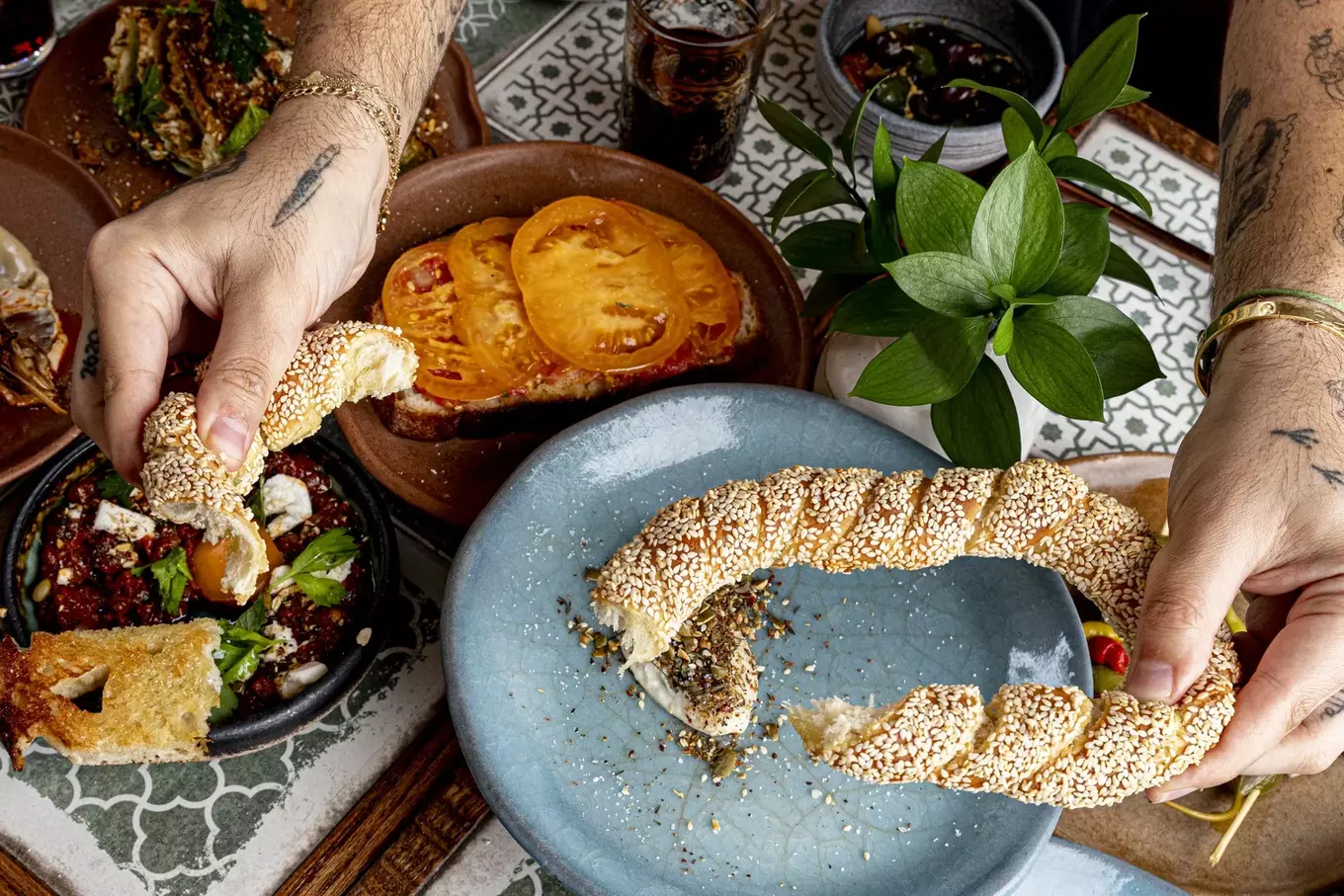 Al-Andalus
The gamble has paid off with reviews praising the vibes and the menu—not just for the creative dishes (think harissa-spiced tortilla, stuffed cabbage, shakshuka, shawarma mushrooms, and baladi bread) but for their affordability in an uncertain economy. Most dishes clock in at under $10.
Long Count, which also sits in Manhattan’s Lower East Side, bills itself as an aged wine and focaccia bar that features wines at least 10 years old alongside slow-fermented small plates.
“Long Count has to be one of the coolest bars I have ever been to,” DeRossi says, even though he insists he is “the least ‘cool’ person” he knows.
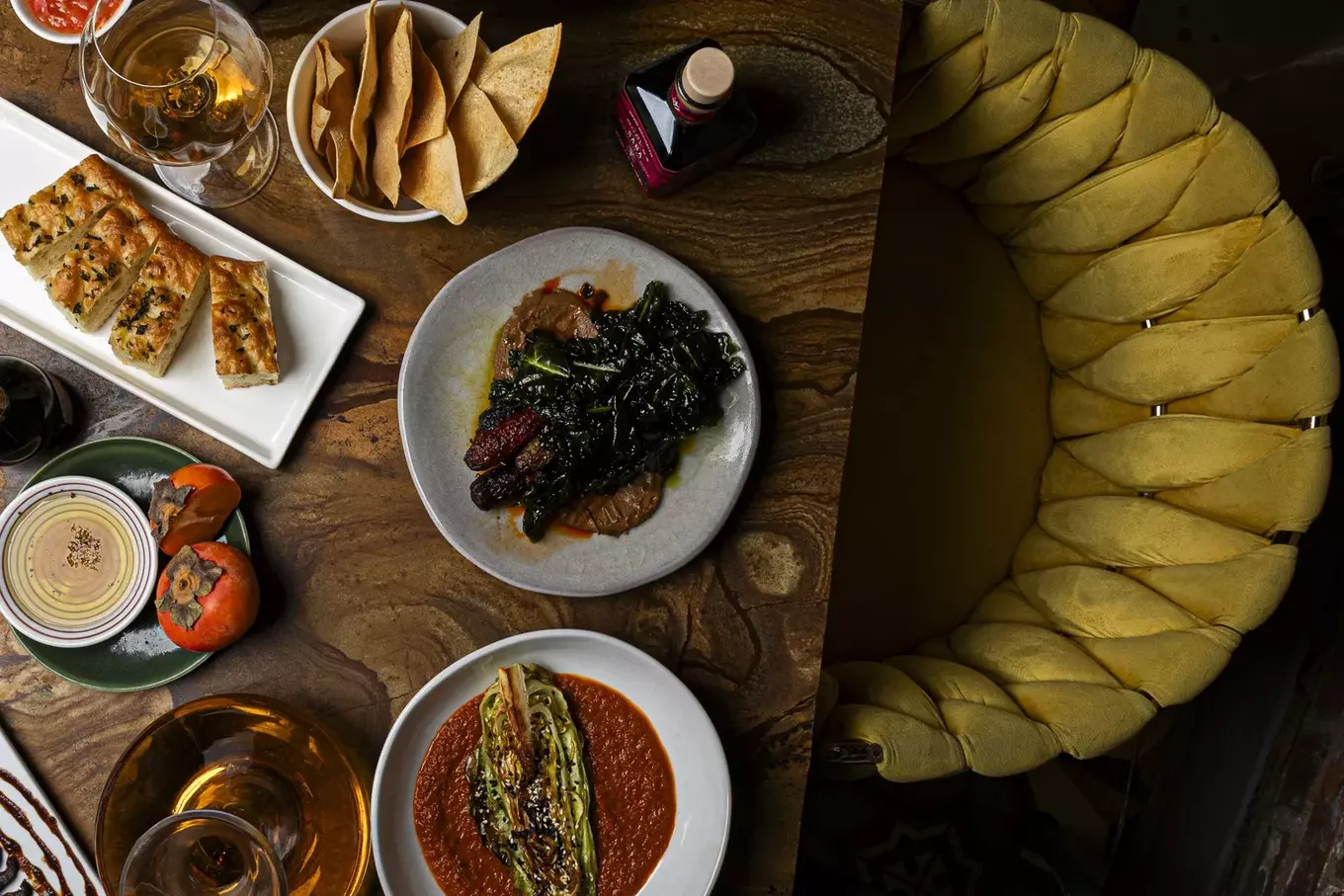 Long Count
“Where else can you get a 30-year-old Cab Franc, and by the glass, as well as fermented black truffle arancini? It’s kind of insane what a little bit of patience does to flavor; it’s just really fucking cool,” he says.
“Everything we have ever created at Overthrow Hospitality is a niche subject,” DeRossi says. “Whether it’s a restaurant that only serves mushrooms or a cocktail bar that serves only stirred amaro cocktails with zero juice, we like to limit ourselves,” he says. “I think it inspires creativity to give ourselves set parameters to work within.”
For more plant-based stories like this, read:
JUMP TO ... Latest News | Recipes | Guides | Health | Subscribe

Jill Ettinger is a digital editor for VegNews and co-founder of the sustainable luxury platform, Ethos.