


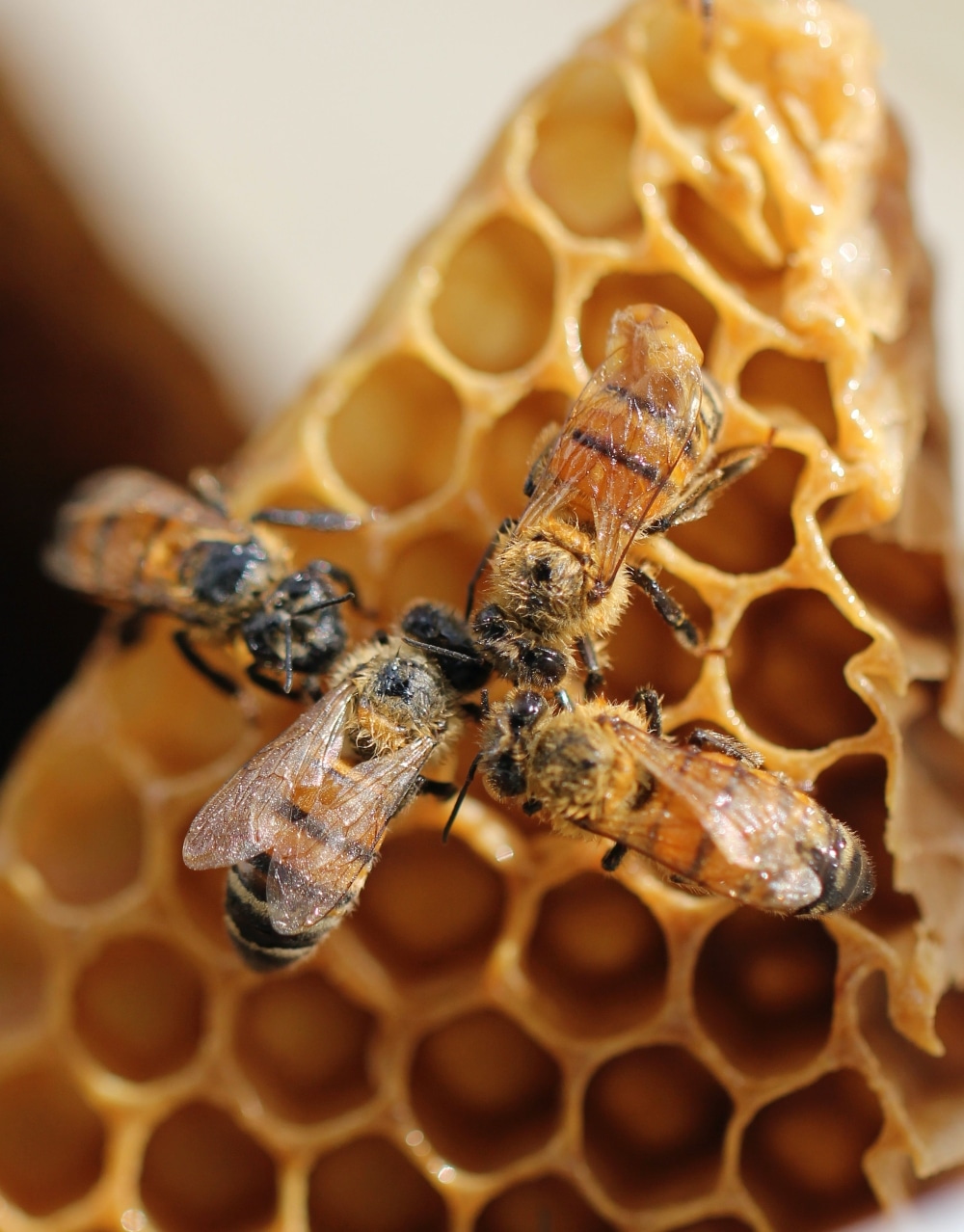
If you’re choosing where to buy groceries based on ingredient lists, price, or vibe, the decision often comes down to familiar trade-offs. Whole Foods versus Target or, perhaps, Sprouts versus Trader Joe’s. One promises cleaner sourcing, another convenience or cult snacks. A new national scorecard adds an unexpected layer to that calculation: bee health. According to Friends of the Earth’s 2025 Bee-Friendly Retailer Scorecard, Whole Foods and Sprouts Farmers Market are the only two major grocery retailers in the US to earn an A for protecting pollinators—a distinction that may tip the scale for shoppers already leaning toward cleaner and more planet-friendly food.
The scorecard evaluates 25 of the country’s largest grocery chains on how effectively they are reducing toxic pesticides in their supply chains. These chemicals are widely linked to declines in bees, biodiversity, soil health, and human health. While several retailers showed incremental improvement, only Whole Foods and Sprouts reached the top tier, separating themselves from competitors that many consumers consider interchangeable for everyday shopping.
 Unsplash
For shoppers weighing Whole Foods against Target, or Sprouts against Trader Joe’s, the contrast is stark. Target fell to an F this year, joining a group of retailers that Friends of the Earth says failed to demonstrate meaningful progress on pollinator commitments. Trader Joe’s, long popular for affordability and private-label convenience, did not approach the A range either, earning a D grade alongside Dollar Tree and Aldi. The result reframes familiar grocery decisions: the store you choose for “cleaner” food may also be the one doing more to protect the ecosystems that make fresh food possible.
What the scorecard reveals about popular grocery chains
Friends of the Earth designed the Bee-Friendly Retailer Scorecard to measure pesticide reduction policies, transparency, supplier standards, and organic sourcing—factors that directly influence pollinator exposure. Bees are responsible for pollinating a significant portion of fruits, vegetables, and nuts, according to the Food and Agriculture Organization of the United Nations. When pollinator populations decline, food prices and availability are impacted.
Whole Foods and Sprouts rose to the top largely because of organic sourcing. The USDA Organic seal prohibits more than 900 synthetic pesticides, including many associated with bee harm, soil degradation, and human health risks. Friends of the Earth identifies organic sales as one of the strongest indicators of pollinator protection across retailers.
 Canva
Canva
Sprouts earned its A after announcing a new pollinator health commitment in December, aimed at reducing toxic pesticides throughout its supply chain and building on what the scorecard describes as industry-leading organic sales. Whole Foods continues to score highly due to supplier requirements that limit certain neonicotinoid pesticides and promote integrated pest management practices.
By contrast, Target lost points for failing to communicate progress toward its stated pollinator goals. Friends of the Earth has also commissioned testing that detected multiple pesticides, including PFAS compounds, in Target’s Good and Gather baby food—an issue that has heightened consumer scrutiny of pesticide exposure in everyday groceries. Other F-rated markets include Wegman’s, Hy-Vee, H-E-B, and Publix.
Joining Sprouts and Whole Foods Market near the top of the list are Giant Eagle, Costco, Walmart, and Meijer—all with B ratings.
The broader impact
For many shoppers, organic food is a personal health decision. The scorecard reframes it as a system-level choice. Reducing pesticide use not only protects bees, it supports healthier soils, water conservation, and long-term crop resilience. That resilience is increasingly relevant as climate volatility strains food supply chains.
BECOME A VEGNEWS VIP: Get exclusive product deals, freebies, and perks galore!
Friends of the Earth estimates the US food retail sector faces $219 billion in combined climate, biodiversity, and financial risk tied to pesticide-dependent agriculture across just four major crops. Pollinator loss has already been linked to reduced yields in apples and cherries—staples in produce departments nationwide.
“Pesticides are a linchpin in an industrial food system that is destroying the web of life—from pollinators to soil to human health,” Kendra Klein, deputy director of science at Friends of the Earth, said in a statement. “Retailers have both the power and responsibility to accelerate a transition to safer, more resilient agriculture. The leaders on this scorecard prove that progress is possible—and consumers are demanding it.”
For more plant-based stories like this, read:
JUMP TO ... Latest News | Recipes | Guides | Health | Subscribe