


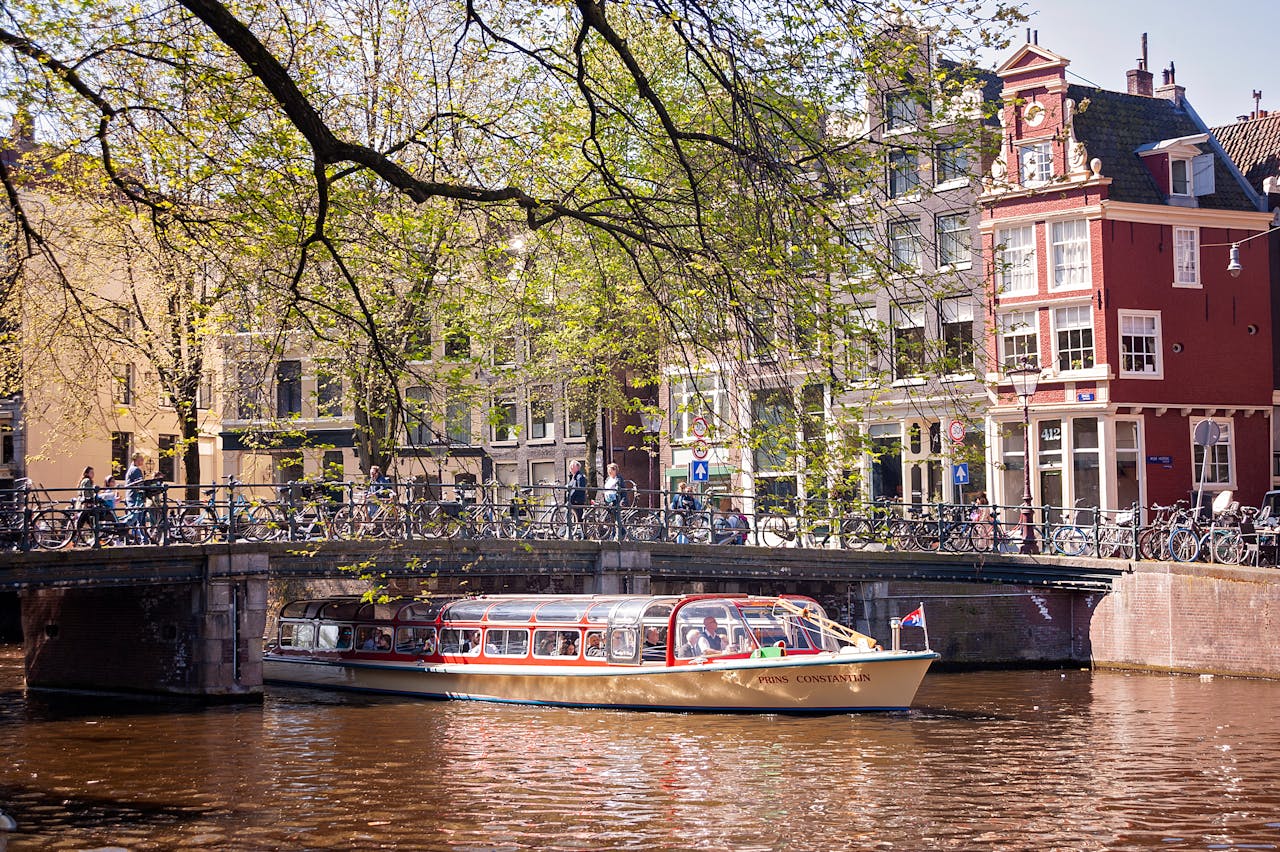
There’s a lot to see when you walk through Amsterdam’s cobblestoned paths and canals: old 17th-century buildings, a welcoming café culture, and high-end boutiques. But starting in May, one thing you won’t see on the streets of the busy Dutch capital is meat—well, meat advertisements, anyway.
This January, thanks to a bill jointly tabled by the Party for the Animals and the Green/Left party, Amsterdam became the first capital city in the world to ban meat advertising in public spaces.
 Pexels
The move is part of a wider mission to promote sustainable food system change across the city. Meat, of course, is a leading cause of emissions. Research suggests the entire animal agriculture industry could account for up to 20 percent of global greenhouse gas emissions. To put that in perspective, that’s double the amount produced by the fashion industry—another major polluter.
The ban will also cover fossil fuel products and will apply to all public spaces. This means bus stops and street billboards across the city will not promote meat.
The Netherlands moves away from meat
“We know that most of the carbon emissions in the food system come from meat production, so it makes sense for Amsterdam to restrict the advertising of meat as part of its strategy to promote food system change,” Joey Cramer, Director of ProVeg Netherlands, said about the ban.
“This policy supports Amsterdam’s existing goal of ensuring [its] citizens’ diets are 50 percent plant-based by 2050,” he added. “Such a shift is not only good for the climate, it’s good for people’s health and, of course, for animals.”
Amsterdam has consistently led the way in promoting sustainable food habits. In 2024, for example, it became the first capital city in the European Union to endorse the Plant Based Treaty.
BECOME A VEGNEWS VIP: Get exclusive product deals, freebies, and perks galore!
But it’s not the first Dutch city to ban meat advertising. Back in 2022, Haarlem became the first city in the world to enact such a ban. “Tobacco and alcohol advertisements have been banned for years, so it is possible,” said Haarlem GroenLinks councilor Ziggy Klazes in a radio interview with Haarlem105. “You cannot exclude companies from advertising, but you can exclude product groups.”
The Netherlands, more broadly, has been making serious moves to rein in animal agriculture. In 2021, the Dutch government announced a nearly $30 billion plan to reduce the number of farmed animals in the country. In 2025, it was revealed that for the first time ever, pig numbers in the Netherlands had fallen below 10 million.
For more plant-based stories like this, read:
JUMP TO ... Latest News | Recipes | Guides | Health | Subscribe

Charlotte is a VegNews editor and writer based in sunny Southsea on England's southern coast.