


Since returning to the White House in 2024, President Donald Trump has made it clear that his administration intends to leave its mark. Bold moves have already reshaped multiple sectors, with more changes still on the horizon. But what do these policies mean for the vegan food industry specifically?
The answer is complicated. In many cases, the impact has been troubling, but there are a few unexpected silver linings. Here’s a closer look.
 USDA
USDA
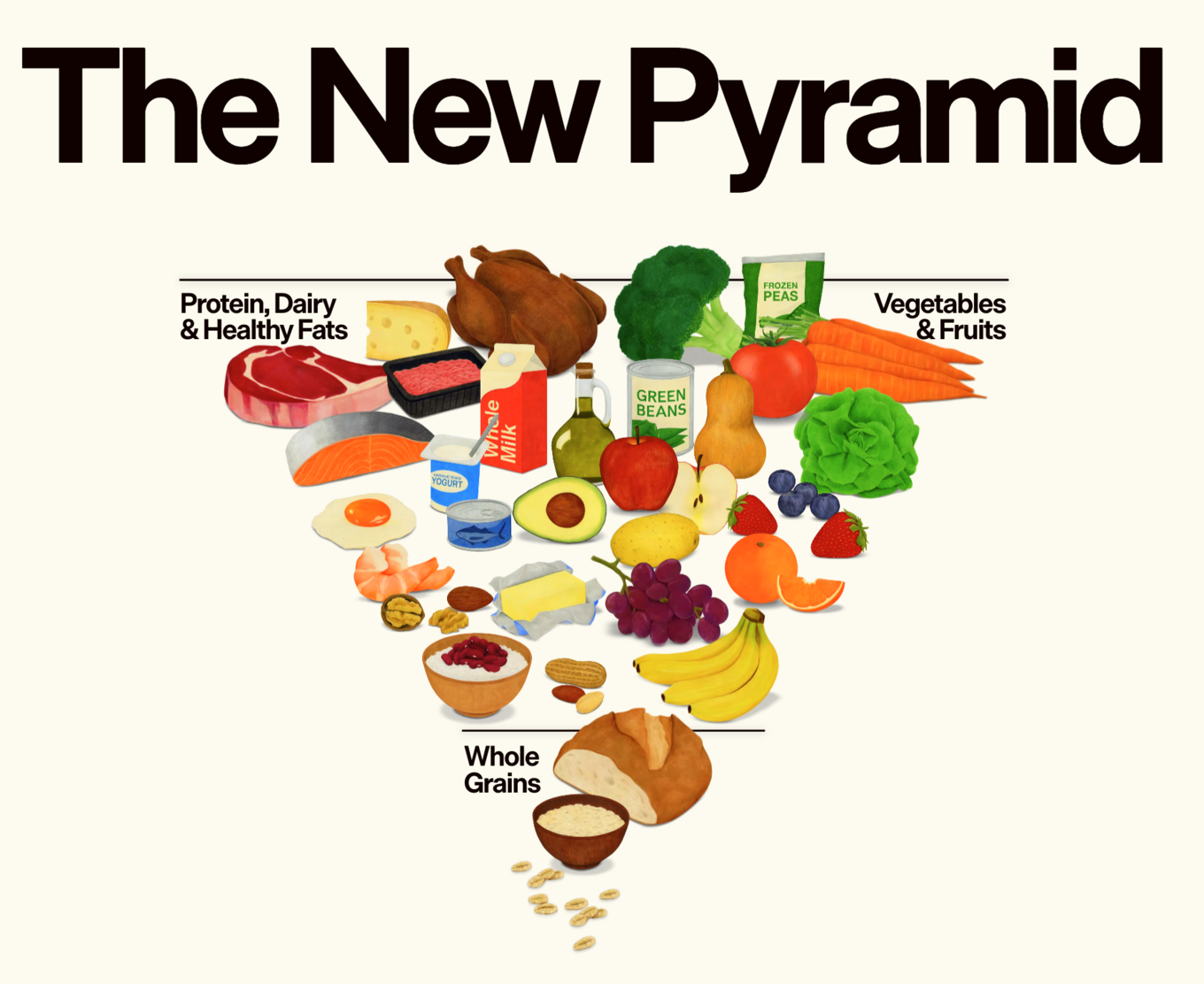
1 Placing animal protein at the top of the food pyramid
Perhaps the most visible way the Trump administration has influenced how Americans eat is through recent changes to the US Food Pyramid. A new graphic released as part of the updated Dietary Guidelines for Americans places animal-based foods alongside vegetables at the top, while whole grains and fruits appear at the bottom.
This design suggests that whole grains are less important than meats and cheeses, despite decades of research linking fiber-rich foods to reduced heart disease risk and improved metabolic health. Some experts did, however, praise the administration’s recommendation to limit ultra-processed foods.
“I’m very disappointed in the new pyramid that features red meat and saturated fat sources at the very top, as if that’s something to prioritize,” Christopher Gardner, a nutrition scientist at Stanford University and former member of the Dietary Guidelines Advisory Committee, told NPR. “It does go against decades and decades of evidence and research.”
Kitty Block, CEO and president of Humane World for Animals, also expressed concern about the role that major meat and dairy interests may have played in shaping the updated guidelines.
“In 2026, [Big Agriculture’s] concerns remain the same as always. It is about building markets for producers, maximizing profits, and misshaping the food pyramid in favor of meat and dairy consumption,” Block wrote in a blog post. “It is also about glossing over the association of animal products with saturated fats, and stifling efforts to promote the benefits of plant-based eating for human health. All of this comes straight from the meat industry’s well-worn playbook.”
 Canva
Canva
2 Changing school milk policies
One key objective of the Trump administration and the Make America Healthy Again (MAHA) movement has been increasing access to whole milk in schools—despite its high levels of saturated fat and cholesterol.
“We’re ending the 50-year war on natural, saturated fat,” said Food and Drug Administration Commissioner Martin Makary in a press briefing. “Remarkably, schools by regulation are not supposed to have a certain amount of whole milk. That makes no sense scientifically. It’s been nutrition guidance by the government based not on evidence, but on dogma.” Despite Makary’s claims, it’s important to note that dairy milk has been linked to several health concerns, including increased risk of certain cancers.
Ultimately, Trump signed the Whole Milk for Healthy Kids Act into law earlier this month. While the legislation reinstated whole milk in school cafeterias, it also included a provision making it easier for students to access dairy-free milk alternatives.
Dotsie Bausch, founder of the non-dairy advocacy group Switch4Good, called the change a win for the plant-based movement. “Students across the country will finally have access to plant-based milk in the school lunch line without the need for a doctor’s note,” she said in a statement. “It’s a simple change with a life-changing impact.”
BECOME A VEGNEWS VIP: Get exclusive product deals, freebies, and perks galore!
3 Driving up the prices of food with tariffs
The Trump administration has been implementing tariffs around the world for some time, but their full impact on the food industry has yet to be felt. According to experts, food prices (including those for plant-based products) could begin rising in 2026 as tariff costs are passed on to consumers.
Ben Lerman, the VP of growth consulting at Spins, told Food Navigator USA: “It is not that there was no impact from tariffs because we didn’t see consumer prices rise in 2025, it is just that they haven’t had time to flow through the system, yet. And it is in 2026, and potentially even late 2026, that we will start to see consumers feel a pinch of these higher tariffs.”
That said, some countries have responded by making plant-based staples more affordable. After Trump introduced 50 percent tariffs on India this past August, the Indian government moved to offset the impact by cutting taxes on certain essentials, including plant-based beverages, soy chunks, mushrooms, and a wide range of fruits and vegetables.
“[The cuts] should directly boost demand, help traders and businesses see higher volumes, and may even favorably impact next quarter’s earnings,” Shripal Shah, managing director of Kotak Securities, told BBC. “It also carries the potential to ease inflation.”
 Getty
Getty
4 Using food as a weapon in the culture wars
One of the biggest ways the Trump administration has set back the vegan food movement is by perpetually fanning the flames of the culture wars. As reflected in MAHA’s new food pyramid, the administration’s position on meat is clear: it should be front and center in the American diet.
Robert F. Kennedy Jr. reportedly follows a carnivore diet—a choice that feels emblematic of a broader political trend. In recent years, all-meat eating patterns have become closely associated with the manosphere and far-right online culture, where meat consumption is often framed as a symbol of masculinity and resistance to progressive ideals. Kennedy himself has leaned into this rhetoric, even recently boasting publicly about Trump’s testosterone levels.
Many now point to this rise in pro-meat messaging, combined with growing concern over ultra-processed foods, as contributing factors to the plant-based meat sector’s recent struggles. Still, not everyone is convinced that the movement is losing momentum.
“The biggest misconception about the plant-based category is that it’s in a massive decline,” Angela Flatland, the senior sales director of plant-based at Spins, recently told VegNews. “The early momentum and breakout years of high growth, followed by market maturation, mean that a reset and rebalancing is a normal trajectory for any new segment.”
5 Ignoring the climate cost of meat
Another major flaw of MAHA’s new food pyramid is that it completely ignores environmental impact. According to a recent report from the World Resources Institute, a 25-percent increase in animal protein consumption would require roughly 100 million additional acres of land. It would also generate millions more tons of greenhouse gas emissions, placing even greater strain on a planet already grappling with the climate crisis.
But environmental concerns have never been a priority for the Trump administration. Earlier this year, atmospheric scientist Ben Santer, PhD, told Carbon Brief that the federal government is actively choosing to disregard the realities of climate change.
“We’re part of the problem now in the US, not part of the solution to the problem of climate change,” he said.
Santer emphasized that other countries will now need to step in to fill the leadership gap. “What’s different today is that it’s an entire administration. This is institutionalized, willful ignorance on the part of the administration.”
For more plant-based stories like this, read:
JUMP TO ... Latest News | Recipes | Guides | Health | Subscribe

Charlotte is a VegNews editor and writer based in sunny Southsea on England's southern coast.