


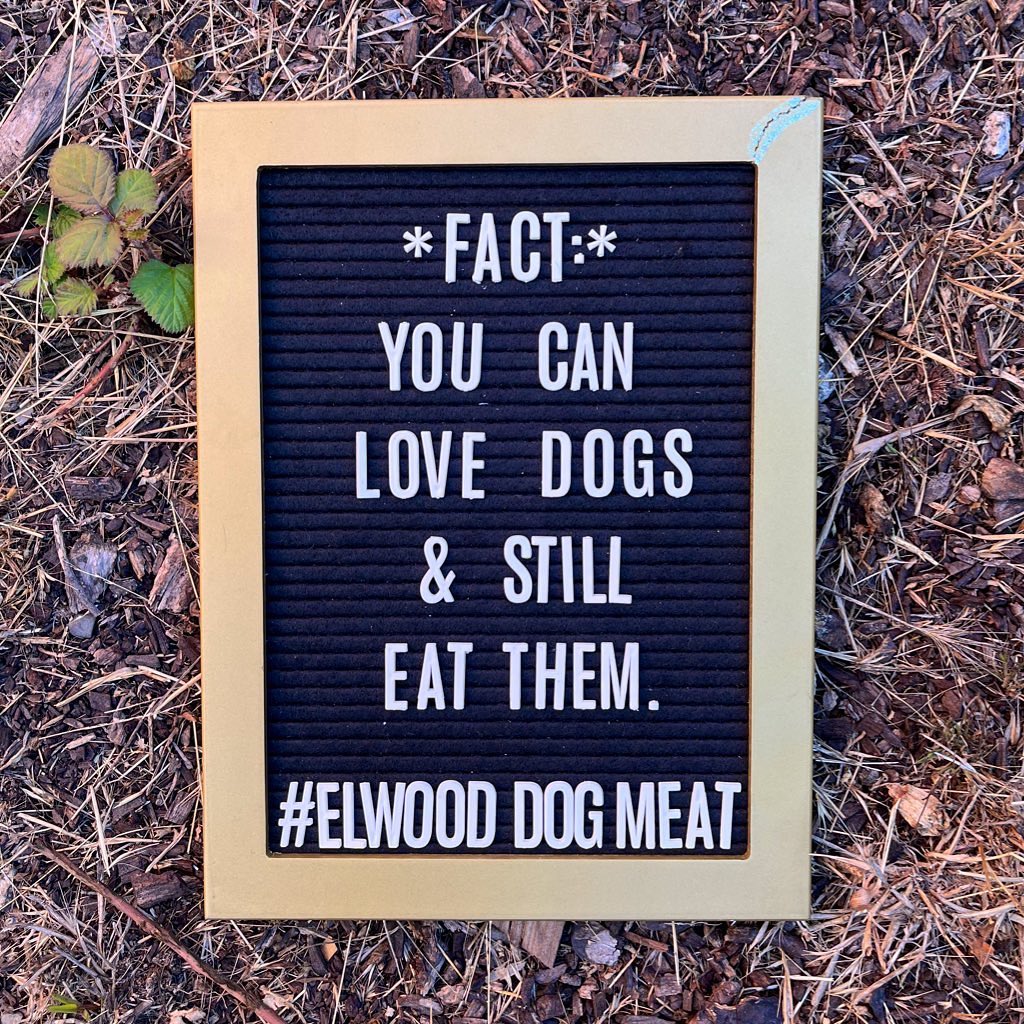
Elwood’s Organic Dog Meat cares. Its labradors, pugs, chihuahuas, corgis, spaniels, and dachshunds are free-range, sustainably raised, never fed antibiotics, and always slaughtered humanely. But if you’re not into eating meat, don’t worry: the ethical, USDA-certified, RSPCA Assured dog farm also offers plenty of vegetarian options, including high-end cheeses made with golden retriever and goldendoodle milk.
Now read that again, but replace the dogs with chickens, cows, pigs, sheep, goats, or any other animals farmed in the millions around the world. It’s a less jarring experience, right? That’s the point.
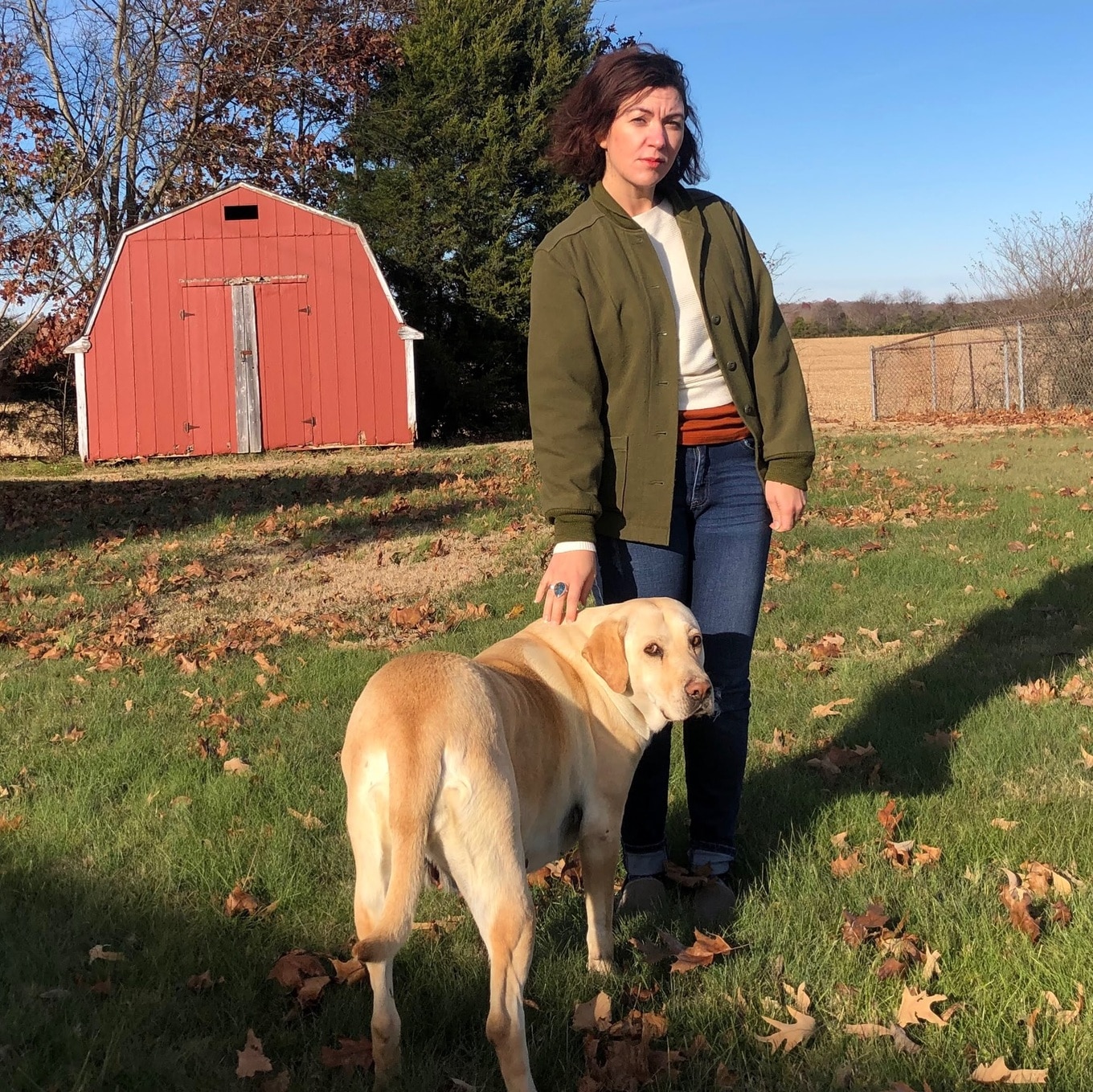
Molly Elwood, who has a background in advertising, started Elwood’s Organic Dog Meat, which is actually a vegan advocacy organization in disguise, to help people connect the dots between the meat they eat and the animals they love.
 Elwood’s Organic Dog Meat / Instagram
The accidental rise of Elwood’s Organic Dog Meat
It all started with a bumper sticker. Back in 2021, Elwood had been vegan for five years and felt called to activism. She came up with the idea of an Elwood’s Organic Dog Meat farm car magnet (like the type you’d see on the door of a realtor’s car), and while designing it, she realized a website would be helpful, too. “Next came the social media,” she said. “It just kind of snowballed from there.”
Before going vegan, Elwood sought out the highest-welfare animal products she could afford. “I [thought] it mattered,” she told VegNews. “That peace of mind, that humanewashing, it allowed me to put off being vegetarian or vegan a lot longer.”
Humanewashing, similar to greenwashing, is a marketing tactic. It relies on misleading labels, words, and imagery to convince consumers that the products they are buying are ethical, even if the reality is far more complicated.
The RSPCA Assured label, for example, from the British charity the Royal Society for the Prevention of Cruelty to Animals (RSPCA), is supposed to guarantee high standards of animal welfare. But in 2024, an investigation by Animal Rising into more than 45 RSPCA Assured farms found overcrowding, filthy conditions, and dehydrated animals. In 2021, PETA investigators visited RSPCA Assured suppliers of The Happy Egg Co. They found chickens with their beaks cut off, their wounds untreated.
 Elwood’s Organic Dog Meat / Instagram
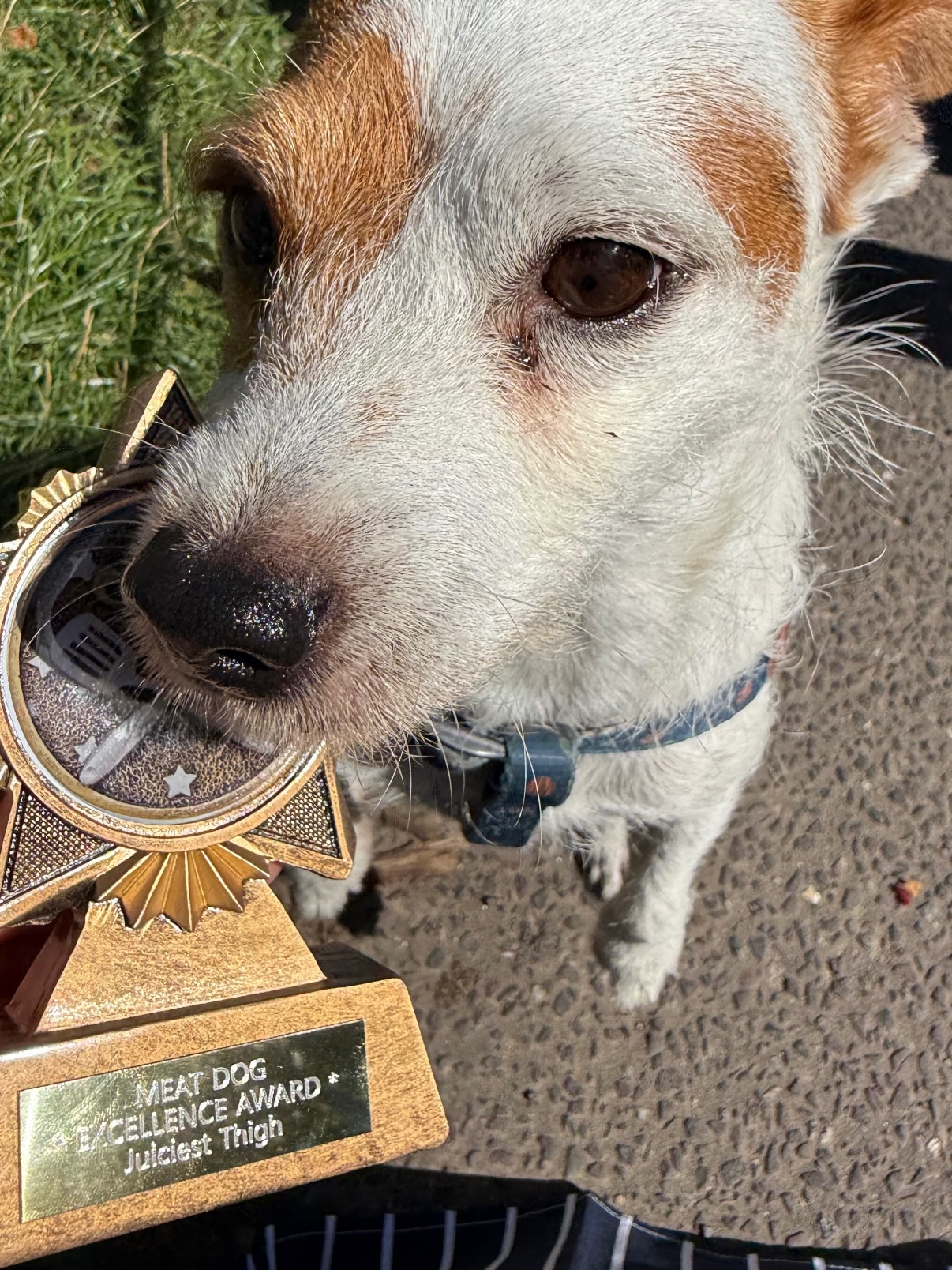
“Specifically, I’m focusing on the humanewashing done by advertisers, grocery stores, and farmers,” Elwood explains. “They manipulate the most caring of consumers, selling them cozy labels: organic, cage-free, free-range, regenerative, ethically raised, humanely slaughtered. We can point to those labels and tell ourselves it’s okay—even when what we are buying is precisely the opposite of what we stand for.”
But even if animals are treated well, Elwood argues, that does not justify slaughtering them for food.
“Even if we treated a dog in the best way possible, raising them better than the highest welfare standards, if they had a bed with their name on it and slept inside and were given puppuccinos and a rain jacket, all that stuff, ‘having a good life’ is still not enough to make up for them being slaughtered,” she said.
Turning outrage into reflection
Through Elwood’s Organic Dog Meat, Elwood aims to start conversations and encourage people to reflect on their food choices. Because many people feel a strong affinity for dogs, their initial outrage at the fictional farm can open the door to a discussion about farmed animals and cognitive dissonance.
“Elwood’s is a bit of a magic trick,” she explains. “It changes the more you look. First, you might see it as dog food, then as dog meat, and finally, you see the activism. The world that has been hidden from you, right in front of your eyes.”
“The goal of Elwood’s is not to embarrass or shame but to hold up a mirror—or maybe a better metaphor is a decoder ring,” she adds. “It allows people to see through the fog of marketing and remember the animal on their plate is an actual animal.”
Today, Elwood’s Organic Dog Meat has nearly 40,000 Instagram followers. Elwood and her team regularly attend events with a pop-up dog meat table, where they “sell” everything from Labrador steaks to Pug bacon and Pomeranian eggs. For anyone unsure about the stunt, all the “dog meat” samples are completely plant-based.
The bait-and-switch approach can be controversial, but Elwood maintains that it is an effective form of advocacy.
“I have spoken to people who have been angry at the tables, people who have knocked over signs or tossed dog meat samples on the ground,” she says. “But everyone I’ve spoken to had what felt like a vegan moment, whether it was understanding or, at the very least, recognition of why Elwood’s exists. They encouraged me to continue doing what I’m doing.”
 Elwood’s Organic Dog Meat / Instagram
Dogs are the most popular companion animals in the US, with more than 56 million American households living with at least one. So the word “dog,” specifically, does something to people. You might have one sleeping by your feet right now. Maybe you have just stroked their head, given them their favorite treat, or rubbed their belly.
Meanwhile, more than 10 billion land animals are raised for food in the US each year, many in industrialized Concentrated Animal Feeding Operations, also known as factory farms.
Elwood wants people to extend the compassion they feel for their dogs to those animals, too.
“Put your hand on your dog’s heart and feel it beat. Feel the warmth of their body,” she says. “The love we have for dogs or cats, or the care we have for the bird we rescued who hit the window, or the concern for the ladybug with one wing … That’s the way we can feel about all animals. We just have to connect with them—and the marketing of animal products is designed specifically to sever that.”
“Seeing a dog in the same place we usually see other animals does something magic,” she adds. “It puts meaning back into the words we see every day. The images of butcher charts and the cuts of meat we see in the shops. They turn back into body parts, and the truth returns.”
For more plant-based stories like this, read:
JUMP TO ... Latest News | Recipes | Guides | Health | Subscribe

Charlotte is a VegNews editor and writer based in sunny Southsea on England's southern coast.