


If your child eats a school lunch, the milk carton is about to change. President Trump has signed the Whole Milk for Healthy Kids Act, clearing the way for whole milk to return to US school cafeterias after more than a decade of low-fat and skim-only standards. The shift follows the release of the Dietary Guidelines for Americans 2025 to 2030, which once again recognizes full-fat dairy as part of a healthy eating pattern—despite experts advising otherwise.
Whole milk comes back to schools
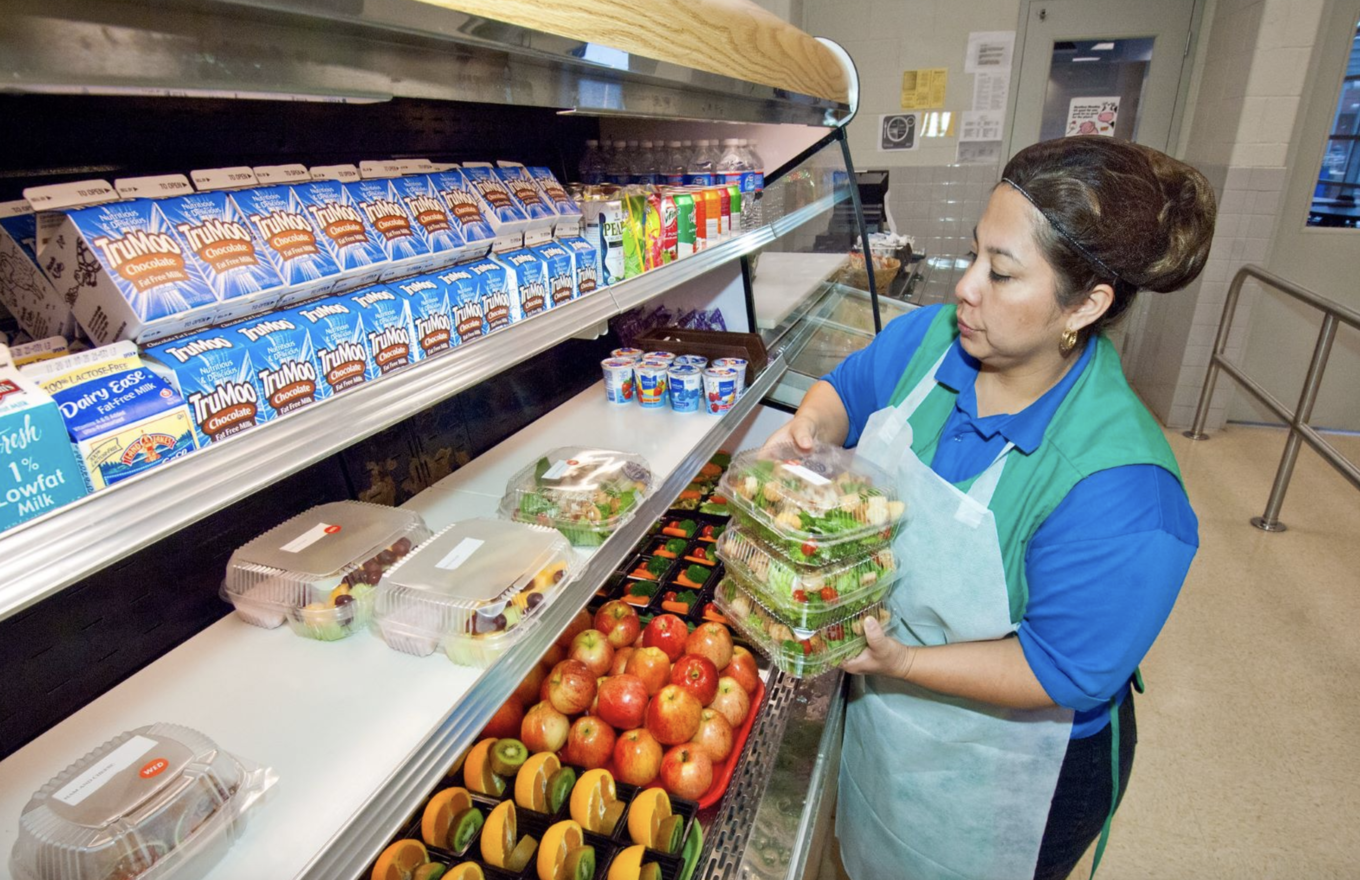
The US Department of Agriculture (USDA) has moved quickly. Schools are being instructed to begin offering whole milk, and broader updates to Child Nutrition Programs are already underway. At the signing, US Secretary of Agriculture Brooke Rollins emphasized both nutrition and economics, framing whole milk as a familiar, nutrient-dense option that also supports American dairy farmers and rural communities. The USDA has even revived a public-facing campaign encouraging Americans to drink whole milk, signaling how central the category remains to federal food policy.
 USDA
USDA
For parents, though, the change may feel like a step in the wrong direction. Milk has not disappeared from households entirely, but the way families think about it has shifted. Fluid milk consumption in the US has been declining for decades, shaped by lactose intolerance, digestive concerns, environmental awareness, and evolving ideas about health. Many families still buy milk, but often with more questions attached than before.
While dietary guidance now supports whole milk, the broader category continues to shrink. Organic dairy milk has captured a growing share of what remains, accounting for about seven percent of US fluid milk sales in 2024, even as overall volume declines. That growth suggests that families who continue buying dairy milk are increasingly selective, prioritizing how it is produced and how it fits into daily life.
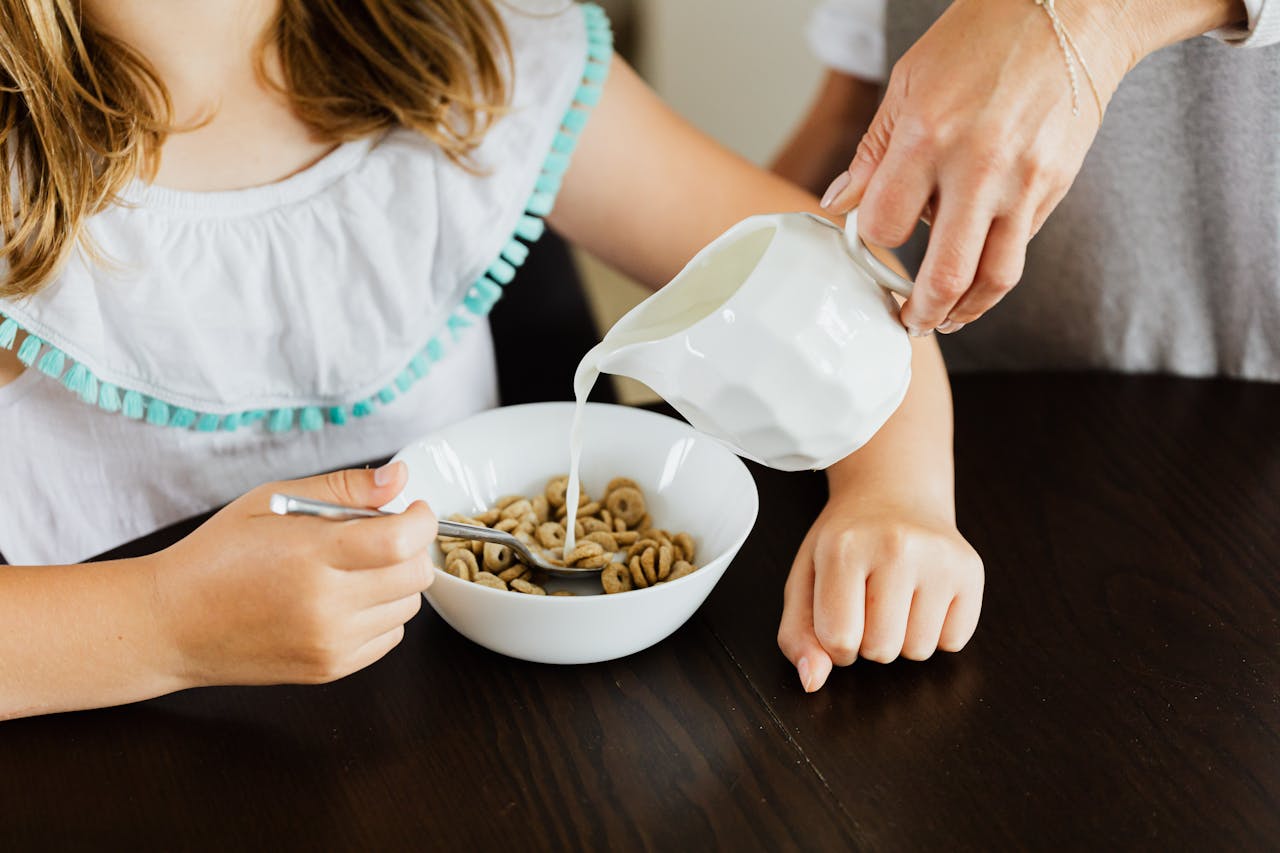
At the same time, plant-based milk has become a normalized part of grocery shopping. About 44 percent of US households purchased dairy-free milk in 2023, and plant-based options now account for roughly 15 percent of US retail milk dollar sales. For many families, these products are not replacements for dairy but practical options used interchangeably in cereal, coffee, smoothies, and cooking.
And for some of the biggest names in plant-based dairy, newer products look noticeably simpler, echoing the same back-to-basics logic that underpins whole milk’s return to schools.
Plant-based milk gets simpler, too
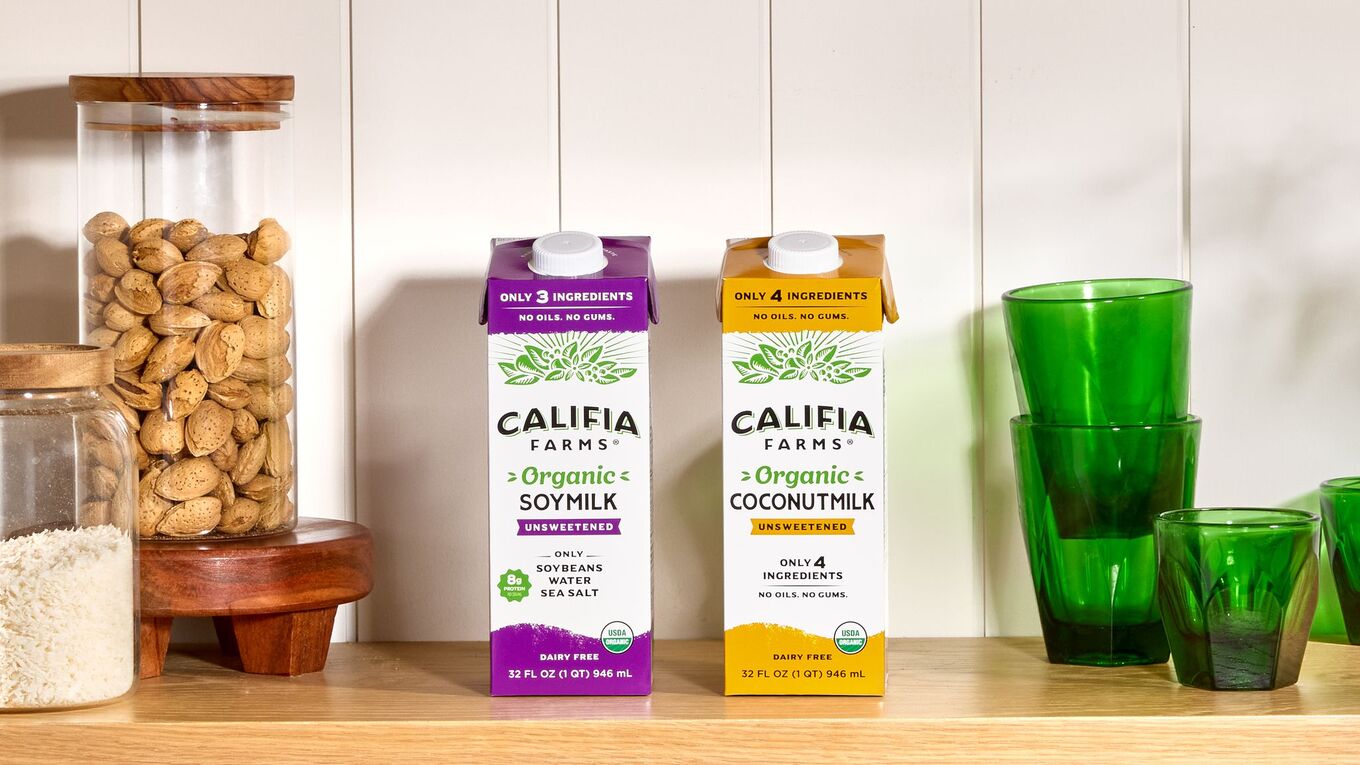
Recent launches suggest that plant-based brands are responding to everyday habits rather than policy shifts. Califia Farms is introducing a streamlined organic soy milk alongside pared-down almond creamers and ready-to-drink beverages designed for coffee and cold brew. The products are positioned for routine use, reflecting how plant-based milk has become a staple rather than a specialty item.
 Califia Farms
A similar approach is shaping new releases from Malk Organics, which has unveiled coconut-based creamers made without gums, oils, or artificial flavoring. Available in vanilla, sweet cream, and unsweetened versions, the USDA-certified organic line is designed to perform well in coffee while keeping ingredient lists short and recognizable.
The same thinking underlies the organic expansion from Ripple Foods, which is extending its protein-forward pea milk into certified organic formats. Becky O’Grady, chief executive officer of Ripple Foods, said in a statement that Ripple Organic was created “to give families an organic option that finally delivers on everything they care about: clean ingredients, great taste, and real, satisfying protein, all in one simple bottle.”
Milk for a new generation
Parents, in particular, have driven this plant-based dairy shift. Surveys consistently show that families with children are more likely to buy plant-based milk for reasons that extend beyond ethics, including digestive comfort, allergy management, and ingredient familiarity. At the same time, those same households report frustration with products that feel over-engineered for something as routine as cereal or school lunches.
 Flickr
This has pushed brands to simplify. Across the category, newer launches emphasize shorter ingredient decks, organic certification, and base ingredients that read intuitively to shoppers—soy, oats, peas, coconuts—rather than blends designed to optimize one nutritional metric. It is a noticeable shift from the previous decade, when fortification and functional positioning dominated packaging.
The trend also reflects how consumers now think about health and environmental impact in tandem. According to the Organic Trade Association, US organic food sales reached $71.6 billion in 2024, growing more than twice as fast as the overall food market.
BECOME A VEGNEWS VIP: Get exclusive product deals, freebies, and perks galore!
Many shoppers who once chose organic dairy milk for pesticide avoidance or farming practices now apply the same expectations to plant-based alternatives. For them, organic certification and minimal processing are not premium features but baseline requirements.
Brands seem to be getting the message.
“For many shoppers, choosing organic in the milk aisle has meant compromising on protein, on taste, or on ingredients they actually recognize,” O’Grady said. “We heard that frustration loud and clear.”
For more plant-based stories like this, read:
JUMP TO ... Latest News | Recipes | Guides | Health | Subscribe