


Have you seen anti-vegan comments on your social media feed? According to a new Reddit post, they could be coming straight from Big Meat. Titled “I was paid to discredit veganism online. AMA [Ask Me Anything],” the post highlights some potentially worrying tactics from the meat industry aimed at undermining and discrediting the vegan movement.
The anonymous Redditor who started the thread claimed they worked for a US meat industry trade group for one year, during which they were paid to trawl social media and push anti-vegan narratives.
We dug through the thread to uncover the most alarming and eye-opening allegations. Here’s what we found.
 Pexels
1 There has long been an organized financial incentive to discredit veganism online
In one thread, the Original Poster (OP) of the AMA implied that the meat industry spent “millions going after vegans” and trying to discredit the movement online. And the worst part? It has apparently been going on for a long time.
“I think it ramped up in the late teens,” wrote the OP. “Prior to that, most of the Big Ag money went to groups with names like ‘Center for Consumer Freedom’ or ‘Humane Watch,’ and they’d attack the Humane Society and other animal rights groups. The strategy was called ‘attack the messenger,’ so they’d find some dirt on someone and use that to discredit anything they said.”
2Emphasizing the concept of ‘Big Vegan’ was one approach used
A key part of the strategy involved portraying the vegan industry as more powerful and threatening than it actually is by referring to it as “Big Vegan.” The OP explained: “We’d talk about ‘Big Vegan’ and all the plant-based big money, but that was a joke. They have like [one-tenth] of [one percent of] what the meat industry has. Think about it. What sells better? Hamburgers or Beyond Burgers? What generates the profit that can fund work like this? Not Beyond Burgers.”
3 The work involved faking negative vegan experiences
The OP said they and other workers would regularly make up fake negative vegan experiences to dissuade others from the lifestyle.
“We’d get a list of nutrients that are certainly available on vegan diets, but not as plentiful, and we’d go to town,” the Redditor claimed in a comment thread. They added: “One ploy was to make a new account, post about a falsified vegan health issue, and say the account was new to ‘keep the cult from knowing I’m saying this’ when in fact the whole thing was staged.”
In another thread, they said: “A cubicle buddy claimed veganism caused him to have OCD and a bunch of people on one sub believed it.”
4 One tactic involved embedding “extremist-vegan” personas into threads
Playing into stereotypes that vegans are extreme was one crucial tactic, said the OP. “We’d pretend to be vegans, and we’d push the vegan subs to be more extreme, and therefore easier to discredit,” they explained.
 Pexels
5 Cherry-picking data and making false claims were encouraged
Fake news is everywhere, and according to the OP, some workers were paid to spread misinformation about veganism. “We definitely cherry-picked data and made claims we knew were false,” they said. “The crop deaths issue was a big one.”
The claim that veganism is pointless because crop agriculture kills animals like mice and birds was exaggerated deliberately, said the OP: “We would embellish the heck out of that. There were no studies that could say one way or another how many mice are in a soy field, and most don’t think ‘oh wait, more crops are grown so we can feed animals.’”
6 Workers signed NDAs to keep details under wraps
The OP explained that they signed an NDA, so they couldn’t get too specific with their answers. They deliberately didn’t name the company they worked for.
7 The pay was low
If you’re wondering how much someone gets paid for this kind of work, the OP says: not much. “The pay wasn’t worth it,” they said. They later clarified they worked from 2pm to 10pm for $17 an hour. For context, the average hourly wage in the US is just over $35 per hour.
8 The meat industry may be preying on vulnerable people to do this work
In another thread, the OP implied that the company deliberately targeted people who were desperate for work. “Usually down on our luck people,” they said.
 Pexels
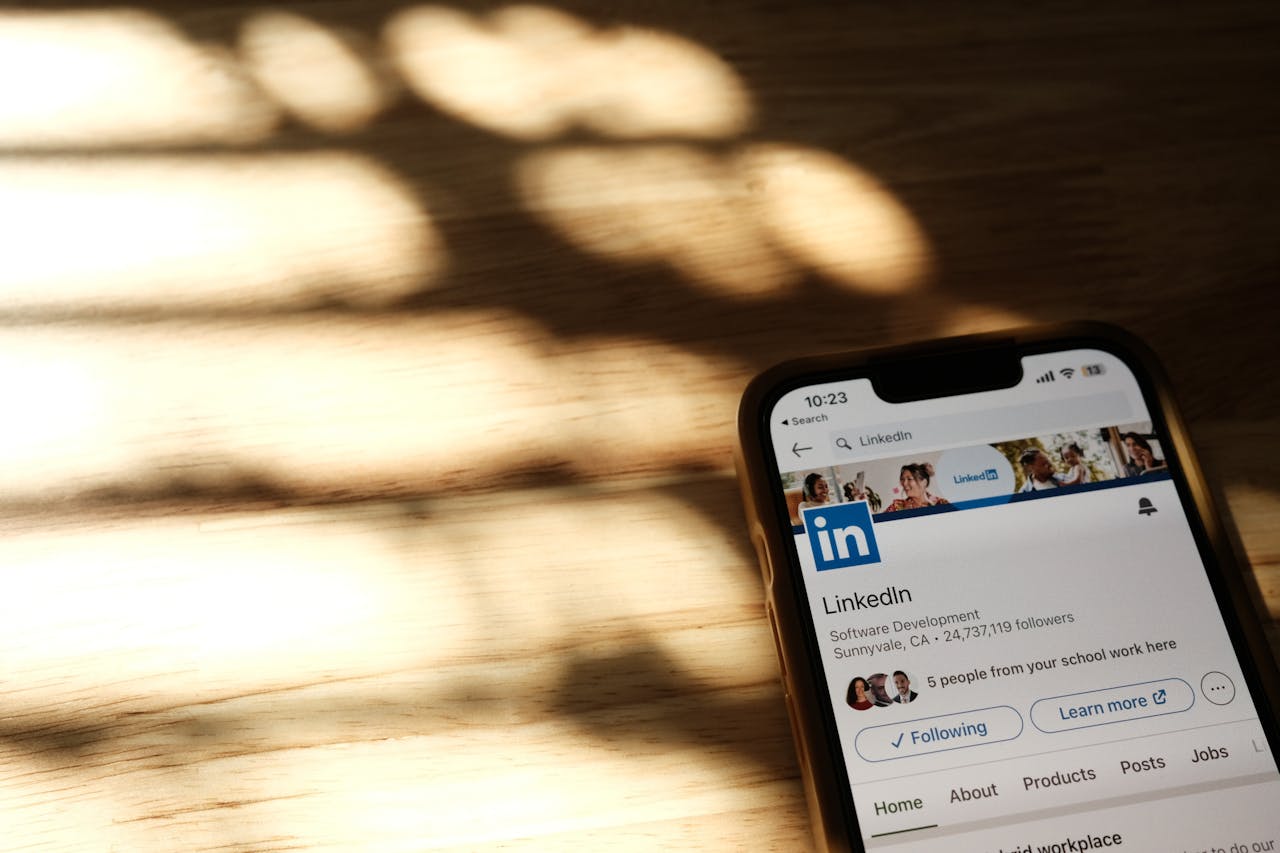
9 It is possible to find this kind of work on LinkedIn
Surely this kind of job isn’t advertised on LinkedIn, right? Apparently, sometimes it is.
“Some of these jobs are promoted on LinkedIn from time to time,” said the OP. They explained that the work would usually be listed under “influence and marketing” rather than lobbying.
10 The OP didn’t realize they felt guilty straight away
According to them, guilt crept in slowly.
“At first, I thought it was edgy and funny. I think I did feel guilty, though. I just couldn’t do it anymore,” they said. “I needed the money, but some things aren’t worth it.”
BECOME A VEGNEWS VIP: Get exclusive product deals, freebies, and perks galore!
11 The work was initially seen as funny
The OP mentioned that their work was seen as funny on a few occasions. In response to one commenter who said the post reminded them of a thread about veganism changing someone’s personality, OP replied that it sounded like the kind of thing their team would come up with. “Making up stuff like that was fun for a while,” they said. “We’d laugh our asses off.”
12 The cultivated meat industry was attacked, too
Cultivated meat, while not vegan, is often marketed as a more ethical alternative to conventional meat. And because it threatens Big Meat, it was targeted too, claimed the OP.
“Lab meat is a serious threat,” they said in one thread. “We’d make up lies about it being made of cancer cells.”
13 No argument was off limits, from health to the environment to animal rights
Most people go vegan for one of three reasons: health, the environment, or animal rights. The OP said they would spend time targeting all three.
“I’d say half was on health, a quarter on the environment, and a quarter on animal rights arguments,” they said.
The OP also confirmed they used to reinforce stereotypes that vegans are “rude and inconsiderate” to dissuade people from joining the movement.
 Getty
Getty
14 Promoting the carnivore diet was part of the job
Recently, it’s been hard to avoid conversations about the carnivore diet online. Part of that online buzz, claimed the OP, comes from industry influence. “Carnivore diet is a total PR stunt,” they said.
15 Fear-mongering over UPFs and chemicals was key
The OP said they exploited fears around ultra-processed foods (UPFs) and ingredients in plant-based products.
“We’d find some ingredient that came from mushrooms, but had a long name, and we’d scare people to death with it,” they recalled.
Whole foods weren’t exempt either: “There was a lot of ‘plants are poison,’ ‘sugar spikes,’ ‘carbs, this and that’ rhetoric,” they said. “I typed ‘eating fruit is like drinking soda’ a few times.”
16 Big Meat pays influencers to push certain diets
Many influencers love to talk about carnivore diets and other all-meat eating patterns, as well as the supposed benefits of foods like bone broth. But guess what? The OP says many of them are paid by Big Meat to say those things. “Influencers make boatloads of money this way,” they said.
17 All posters would work together to boost comments
The OP didn’t work in isolation; they were part of a team. According to them, everyone would work together to ensure their posts and comments got optimal visibility on social media. They noted they would “have 10 guys in the cubicle farm start responding to you so your posts go to the top.”
18 Specific attacks on PETA were made a priority
Unsurprisingly, meat industry lobbyists wanted to take down one of the biggest and oldest voices in the vegan movement: People for the Ethical Treatment of Animals (PETA). “They funded some attacks on them at one point,” they said.
 Pexels
19 The work relies on people not fact checking sources
Much of the content they pushed could easily have been debunked, but that didn’t matter. “It’s easy to link to a bunch of sources and claim they say one thing when they really say another,” the OP said. “It is rare for anyone to check sources.”
They added elsewhere: “You can say almost anything and some percentage of people will accept it without question.”
20 Take everything with a grain of salt
The OP has deleted their account to remain anonymous, so the truth is, there’s no way of truly knowing the accuracy of their claims. But in a way, that uncertainty underscores their point. “You have every right to be skeptical of me,” they said in one thread. “If you are skeptical of me and others, then I have done my service in making people smarter and better protected from scams and frauds.”
They added in another: “This fake propaganda problem goes much deeper than the debate over veganism. I hope my AMA helps everyone be smarter and wiser about what they read online.”
For more plant-based stories like this, read:
JUMP TO ... Latest News | Recipes | Guides | Health | Subscribe

Charlotte is a VegNews editor and writer based in sunny Southsea on England's southern coast.