


In Scotland, a fox was recently caught stealing milk bottles from a doorstep. And somehow, it made headlines in the American news.
For an entire month, the milk-stealing fox got away with the crime. Night after night, it crept up to the doorstep of Glasgow resident Gordon Campbell, knocked over bottles of milk, and carried them away. For weeks, Campbell was baffled. He couldn’t work out who was responsible for the theft and even suggested that magpies or “militant vegans” might be taking bottles of cow’s milk from his doorstep.
After setting up a hidden camera one night, Campbell quickly realized the culprit was actually a sneaky fox, and his heart melted. Telling the story to the Daily Mail, he said: “I just thought it was kind of hilarious that this wee, cute fox was popping up and taking it away. All was forgiven when I saw its big ears and its wee face.”
It’s light-hearted, fun, and a little heart-warming. It hits all the right notes for an animal story destined for virality. But part of what helped this particular tale spread had less to do with a sweet fox following its nose than Campbell’s offhand joke about “militant vegans.”
Whether intentionally or not, it gave many conservative outlets an opening to turn a wholesome animal story into culture-war fodder.
The politics behind militant vegan headlines
For many conservative outlets, Campbell’s passing joke became the story’s defining angle. It’s part of a broader pattern we’re seeing right now, in which animal stories, jokes about cream cheese, and even taco orders are reframed as provocative, headline-grabbing culture-war stories.
We’ll elaborate: When journalist Taylor Lorenz asked for more cashew cream cheese at New York City bagel shops, jokingly asking mayor Zohran Mamdani to get on the case on X, the backlash was immediate. “Right-wingers and reactionary weirdos are all QTing this, taking it so seriously and getting angry at the concept of vegan cream cheese,” Lorenz responded in another post.
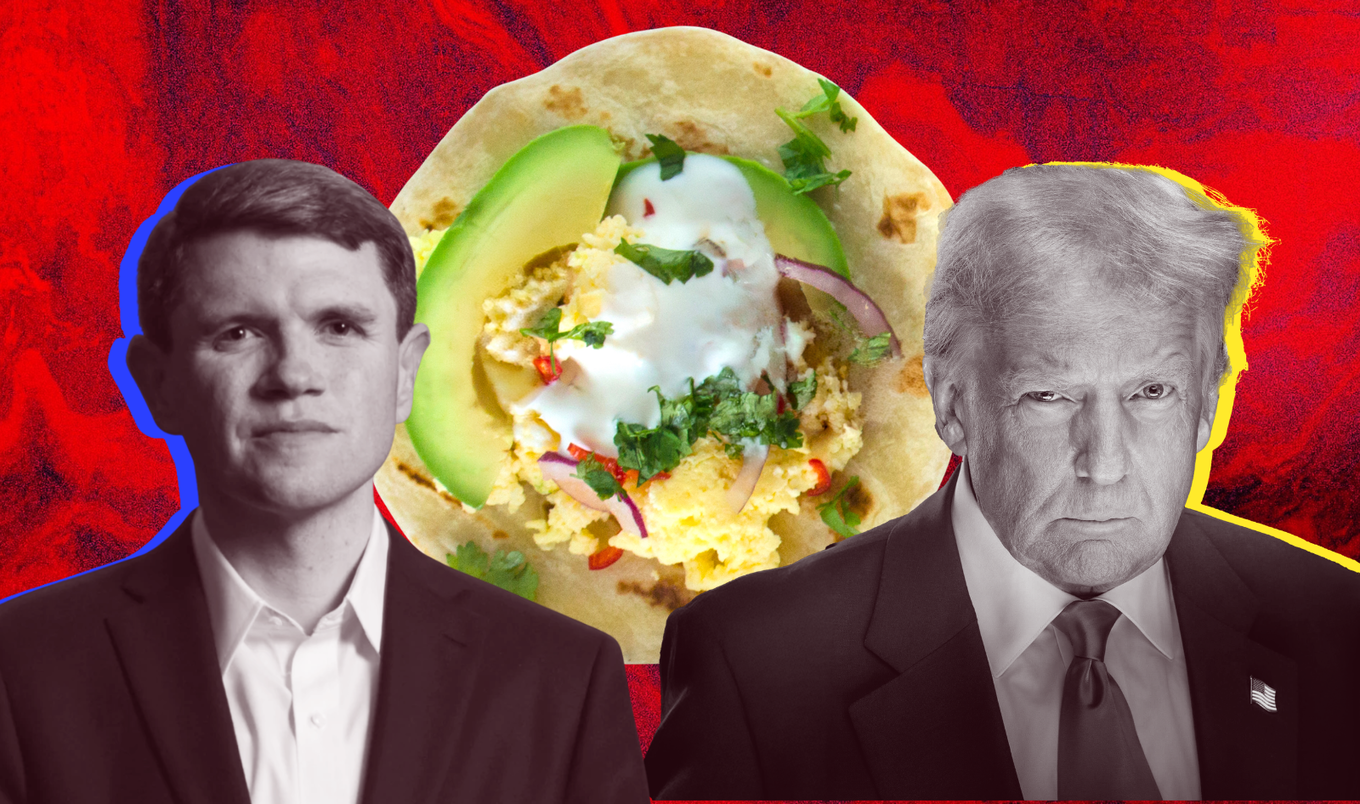
And when Democratic US Senate candidate James Talarico ordered a potato, egg, and cheese breakfast taco earlier this year, conservatives were similarly quick to pounce. Texas Governor Greg Abbott posted to his campaign’s X account: “Potato egg and cheese? Homie is not beating the vegetarian allegations.”
Republicans, including President Donald Trump, have repeatedly accused Talarico of being vegan. One of his nicknames is even “Tofu Talarico,” which, granted, we actually think is quite catchy.
For the record, though, Talarico is not plant-based, but he has spoken out about sustainability concerns and rising meat prices, positions that seem to have made him an easy target in the culture war over food.
 Humans of New York
Actually, vegan stories are rooted in compassion and strength
Around the world—and especially in the United States—meat is often intertwined with ideas of masculinity, patriotism, and tradition. Think of a Fourth of July barbecue: it’s as much about identity as it is about food. Research suggests that fewer than 0.1 percent of Republicans identify as vegan. For some conservatives, rejecting meat can be interpreted as rejecting those values.
So, for some, veganism has become an easy cultural shorthand, often associated with weakness or, worse, “wokeness.” The irony, though, is that many real stories about veganism are rooted in strength.
Stories like more than 9,000 strangers raising over $300,000 in less than 48 hours to save New York City’s oldest vegan restaurant rarely break into the conservative mainstream. Neither do stories of plant-based business owners persevering through a difficult economic climate or 90-year-old vegan athletes continuing to set world records.
At their core, these are stories not just of strength, but of compassion, community, resilience, and generosity. Yet they don’t lend themselves as easily to existing culture-war narratives. Tales of “militant vegans” are far more clickable—even when the “militant vegan” in question turns out to be a sneaky, milk-stealing Scottish fox.
For more plant-based stories like this, read:
JUMP TO ... Latest News | Recipes | Guides | Health | Subscribe

Charlotte is a VegNews editor and writer based in sunny Southsea on England's southern coast.